Artist and curator
The Artist
The commitment to Giorgio Lupattelli
The artist
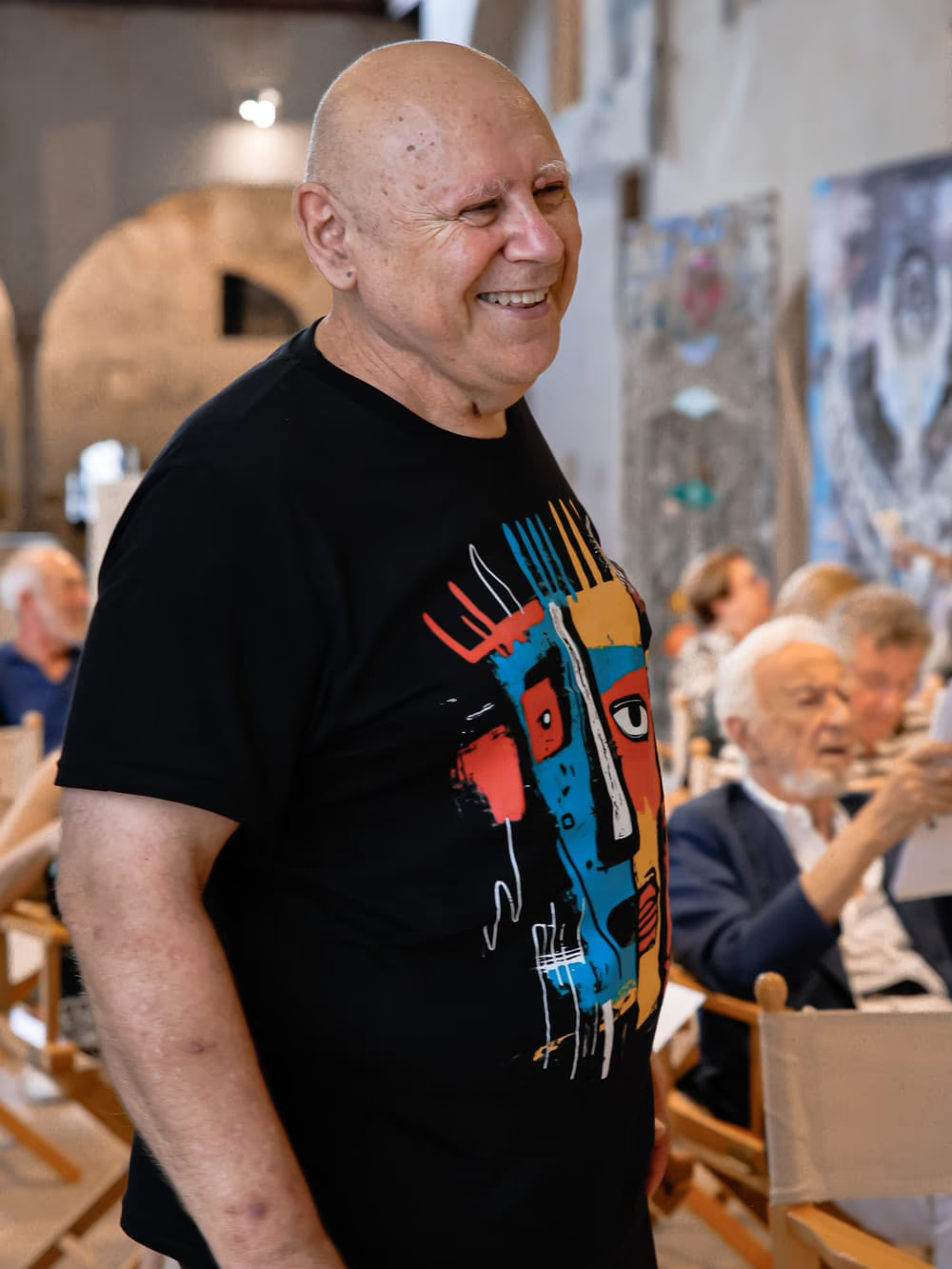
Artist
Scrinium entrusts Giorgio Lupattelli with a commitment: to enter into relation with the Franciscan sources and to question, through his own language, the presence of Francis in our time. From this entrustment THEOPHANIA is born, an original body of work in which iconography, art history, science and contemporary culture converge in the artist’s gaze.
Read more
In the path leading to THEOPHANIA, Scrinium entrusts Giorgio Lupattelli with an artistic commitment: to engage with Francis of Assisi starting from the sources that preserve his testimony and to render freely, through his own language, what that encounter would have generated.
Lupattelli brings his own visual universe into the project: the layering of images, art history, references to science, digital culture and the relationship between body and cosmos, matter and transcendence.
The glitch too, with its shifts, overlaps and fragmentations, enters the pictorial language as a trace of the speed with which images cross contemporary experience. The painting takes on the value of a freeze-frame, giving time back to the gaze.
The commitment hands the source to the artist. The work is his answer.
Giorgio Lupattelli
Artist
Born and active in Umbria, Giorgio Lupattelli has developed since the 1990s a research spanning painting, drawing, graphics, set design, design and contemporary technologies. In THEOPHANIA he returns to the figure of Francis of Assisi after twenty-five years, building a present and universal image of the Saint, able to inhabit the questions of our time.
“My Saint Francis is a subject in which anyone can see themselves: modern, present, not necessarily always the same.”
Read more Giorgio Lupattelli
Giorgio Lupattelli was born and lives in Magione, in Umbria, and has worked on the national and international art scene since 1993. His predominantly scientific background accompanies a practice spanning painting, drawing, graphics, set design, design and digital experimentation.
His relationship with the figure of Francis has long belonged to his path. As early as 2001 Lupattelli had made a large altarpiece dedicated to the Saint; THEOPHANIA marks his return to that subject after twenty-five years of research.
In the project the artist chooses to represent Francis as a contemporary presence. The design phase is born from observation, iconographic research and the digital processing of images; the pictorial realisation brings this complexity back into matter, colour and gesture.
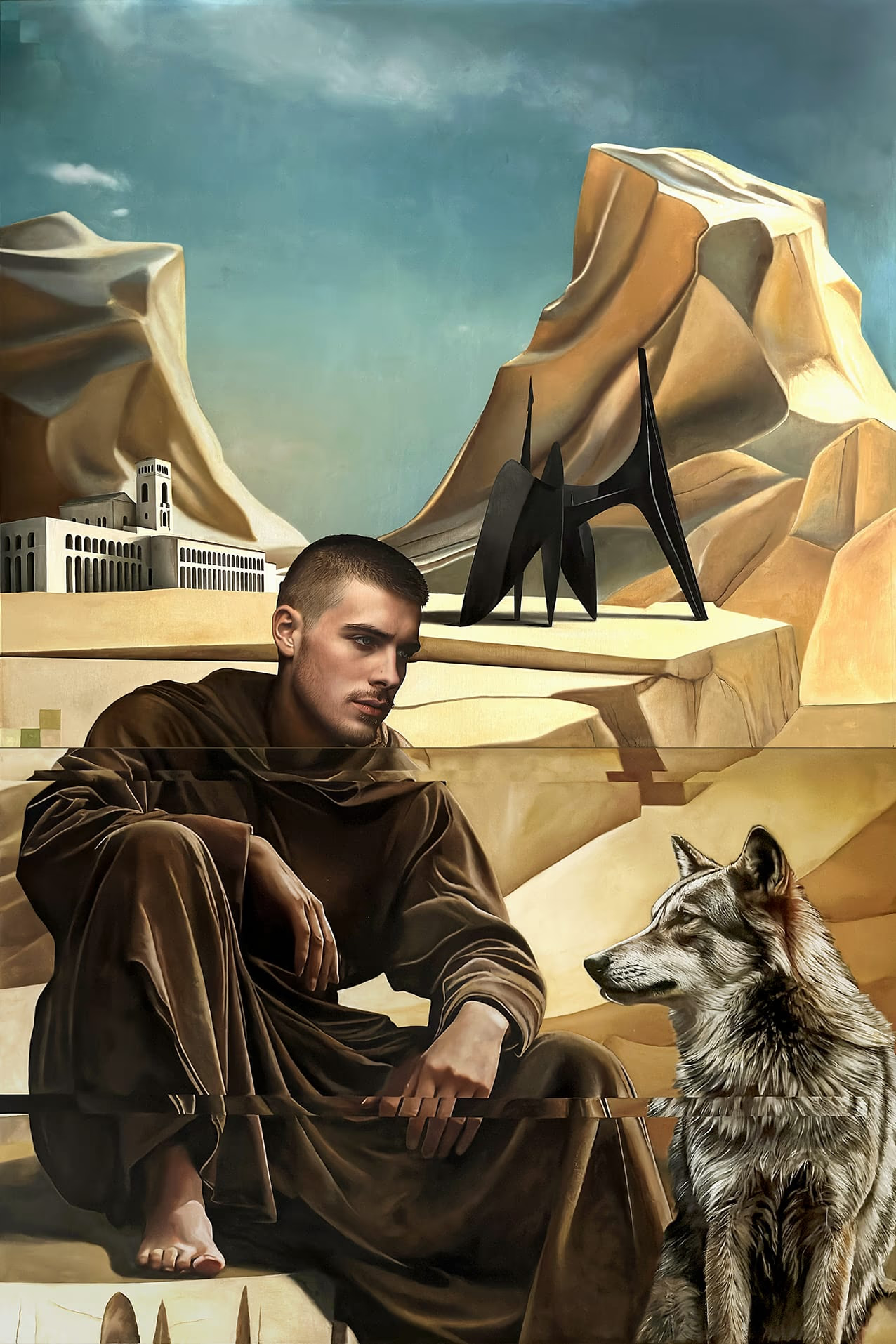
Giorgio Lupattelli, THEOPHANIA (trittico 2), oil on canvas, cm. 120 x180, detail. One of the four large-scale works.
In the studio
Giorgio Lupattelli’s atelier in Magione, where the works of THEOPHANIA took shape.
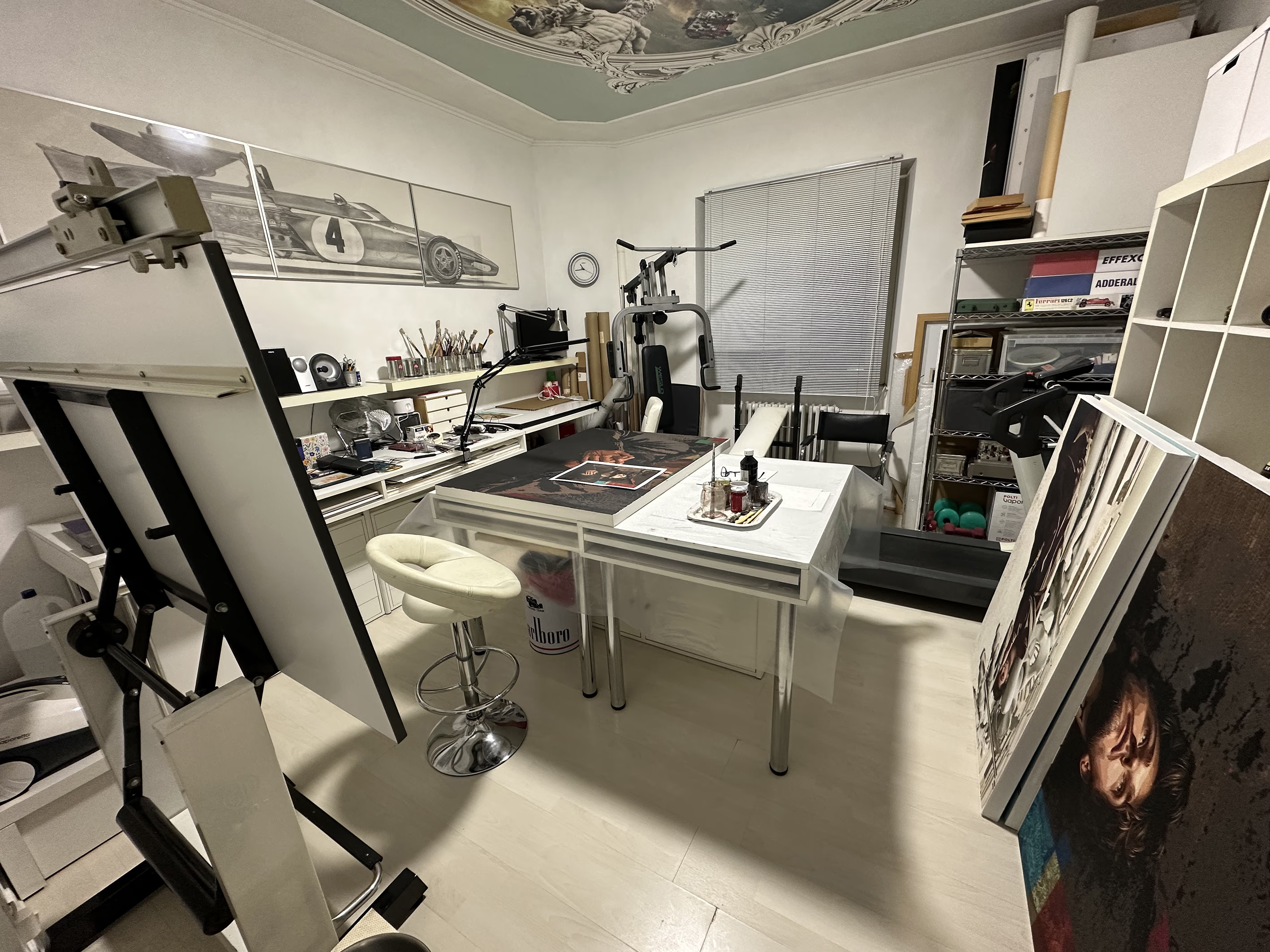
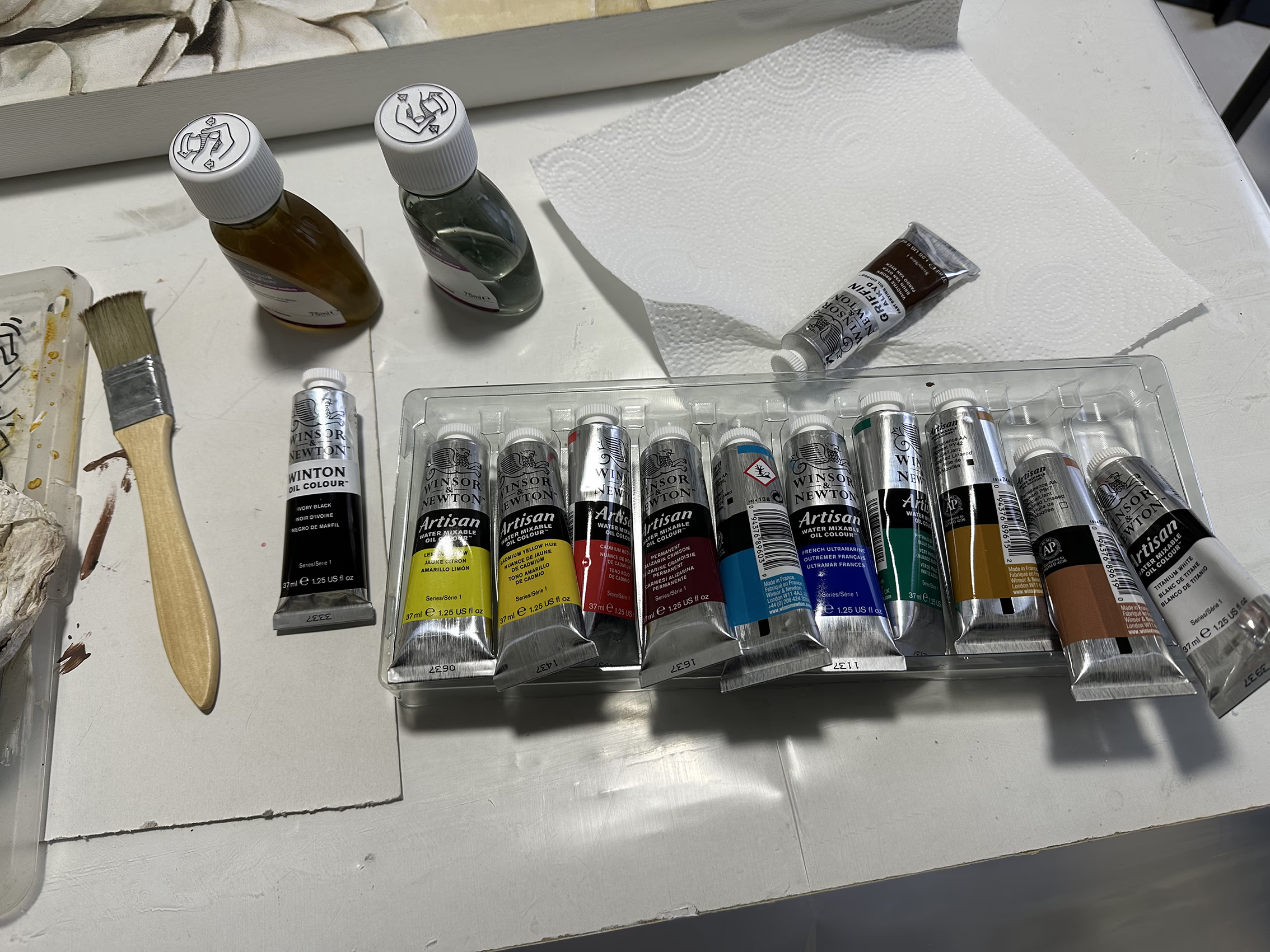
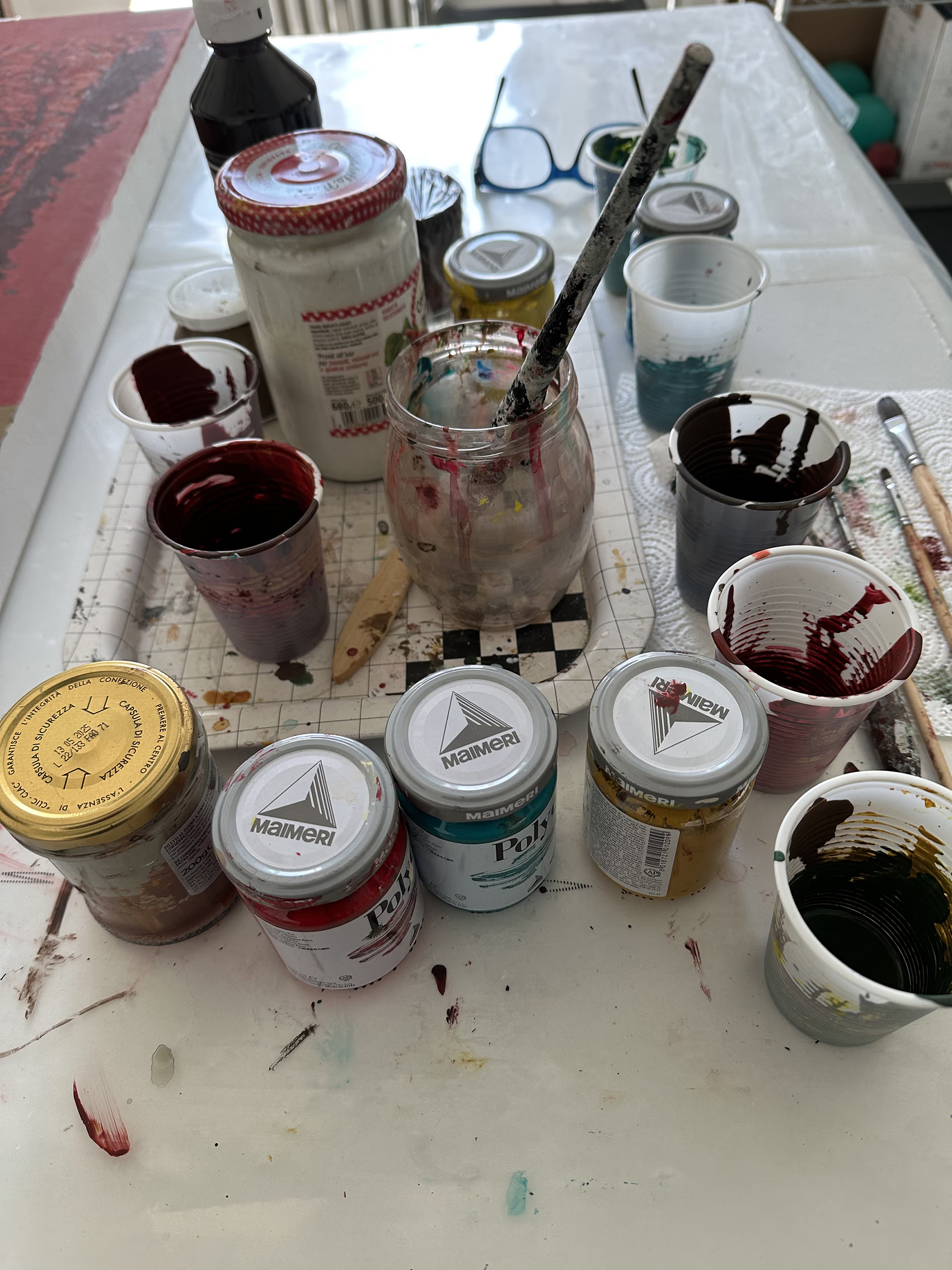
Giorgio Lupattelli’s atelier, Magione. THEOPHANIA press kit.
The critical text
Read Gianluca Marziani’s full text Criticism
Saint Francis of Assisi is an iconic figure of universal reference, the most popular saint and at the same time the most revolutionary in his moral idea of evolutionary values and civic actions. In the arts he has been interpreted in a myriad of ways and versions, attributable to the human need to preserve certain figures within the archetypal reason of myth, where the roots lie upon which humanity builds its collective consciousness.
Giorgio Lupattelli, an Umbrian artist with a solid museum career, as early as 2001 created a large altarpiece dedicated to the Saint, commissioned by the Jubilee Committee of the Church of Magione, the artist’s home town. THEOPHANIA, developed by Scrinium together with Lupattelli, represents the natural development of an approach that belongs to his formative fabric, to a system of thought we find in his experiments between drawing, painting and contemporary technologies.
In the project dedicated to Saint Francis, scientific, philosophical, religious, artistic and broadly cultural values are blended. We find the ancient Umbria of the Renaissance masters, Perugino, Raffaello and Giotto, and that of the great contemporaries, from Gerardo Dottori to Alberto Burri, without forgetting the foreigners who left memorable works on the territory: from Alexander Calder’s Teodelapio to Gino De Dominicis’s Calamita Cosmica, from Arnaldo Pomodoro’s Infinite Column to Joseph Beuys’s Blackboards.
The result is a great journey between memory and dreamlike imagination, between vision and interpretation, a panoramic sounding that recreates a theatre of living memory, of pedagogical release upon the viewer, of the precious fabric through which true contemporaneity is built.
Lupattelli’s approach is that of a satellite observer analysing every surrounding phenomenon, from the real landscape to contemporary media, from the collective imagination to the echoes of an archaeological memory that continues to settle into the cultural heritage of Umbria. From here takes shape an elaborative process that builds a narrative: figures, landscapes, architectures, public works and fragments of visual memory combine into new configurations, giving rise to worlds in which history, imagination and vision coexist in the same space.
The artist’s modus operandi develops through a long design phase in which observation, iconographic research and technological experimentation coexist. The images are progressively elaborated until they reach a compositional synthesis that precedes the making of the work. If we think about it, the Renaissance artists too built the architecture of the painting through studies, sketches and preparatory cartoons before the final execution. In this perspective contemporary technology does not replace the artistic gesture but broadens its tools of research, becoming part of that process that leads from intuition to the completed image.
There are many ways of standing before the figure of Francis, even though everything is often reduced to the bond with nature and the forms of renunciation. Lupattelli, with empathetic intelligence, shows us the Saint in his gentleness but also in his power, in the wisdom that radiates through the physical territory and the spiritual geographies, in the actions of a curious and loving young man, capable of taking a stand with the never vulgar sharpness of right-minded gazes, turned to the future while overturning the stasis of the corruptions around him.
I like it when, first of all, I observe reality through a screen, filtered so that it can be processed in the ideal way. The reason I use painting is not an exercise in technical skill, but because it gives me absolute control of the image, of colour and of those aspects I can handle in a way that mirrors the sketch.
The works recount Saint Francis in a surprising and contemporary way, exalting a genius loci that the landscape integrity of Umbria still allows. The artist interprets his own Francis with the physiognomies of the present and in modes that leap beyond archaic time, modulating a portrait, and at once a self-portrait, to be dressed with our gaze, our civic culture and our moral system.
My Saint Francis is a subject in which anyone can be reflected: modern, contemporary, not necessarily always the same. Visual art is a pause that allows us to see what we look at continuously without being fully aware of it.
In the works emerge references to Burri’s informal art and to Calder’s imposing Teodelapio, to De Dominicis’s monumental skeleton and to the landscape of Lake Trasimeno, as far as the citations of Raffaello’s Marriage of the Virgin and the Giottesque stylings. Never casual citations, which are activated in Lupattelli’s iconographic ritual and in his dreamlike landscapes, where the rules of space and time are continually redefined.
The twelve panels, the generative heart of THEOPHANIA, develop as many themes inspired by the Laudes Dei Altissimi and take shape also from some intuitions of Ferdinando Santoro, originator of the project’s trigger from which the itinerary set out. In them the complexity of the processes finds a gentle synthesis of figuration, while citations, symbols and cultural memory converge into a vision able to restore to contemporaneity the generative force of the Franciscan message.
Gianluca Marziani, critical text for THEOPHANIA.
Selected solo exhibitions
- 2018
- Prometheus. Galleria Triphè, Roma e Cortona
- 2016
- The Dark Side of the Moon. MARCA Museo delle Arti, Catanzaro
- 2014
- ABVD. TAC arte contemporanea, Perugia
- 2010
- Human all too Human. Torre dei Lambardi, Magione
- 2008
- Refresh. Galleria Artsinergy, Roma
- 1996
- Crash. Galleria Il Ponte Contemporanea, Roma
Full biography 51 exhibitions
Solo exhibitions
- 2018
- Prometheus. Galleria Triphè, Roma e Cortona
- 2016
- The Dark Side of the Moon. MARCA Museo delle Arti, Catanzaro
- 2014
- ABVD. TAC arte contemporanea, Perugia
- 2012
- Prozac. Ristor Arte, Roma
- 2011
- D-Days. Accademia del Lusso, Milano
- 2010
- Brain Damage. Betta Frigieri arte contemporanea, Modena
- 2010
- Human all too Human. Torre dei Lambardi, Magione
- 2010
- Fast Forward. Confapi per l’arte contemporanea, Perugia; Spazioblue, Bologna
- 2008
- Refresh. Galleria Artsinergy, Roma
- 2007
- Freon. Spazio Le Lune, Modena
- 2007
- Anabasis 03.06. Galleria Rosso 29, Firenze
- 2006
- Buildings. Galleria Artsinergy, San Benedetto del Tronto
- 2003
- Dr. Jekyll & Mr. Hyde, con Raimondo Galeano. Galleria Il Ponte Contemporanea, Roma
- 2002
- In&Out. Show-Room Farhad, Roma
- 2002
- Mother. Paggeria Arte, Sassuolo
- 2001
- Mother. Galleria Il Ponte Projects, Roma
- 1999
- Questa è la mia casa. Galleria Il Ponte Contemporanea, Roma
- 1997
- Crash. Galleria Betta Frigieri, Sassuolo
- 1996
- Crash. Galleria Il Ponte Contemporanea, Roma
- 1995
- Post Generation. Galleria Placentia Arte, Piacenza
- 1994
- Where do you think you’re going?. Galleria Piano Nobile, Perugia
- 1994
- Per una Ecosferosofia. Galleria Betta Frigieri, Sassuolo
- 1993
- Arte è Comunicazione. Galleria Neon, Bologna
Group exhibitions
- 2025
- Ombre di Vita. Laboratorio 41, Macerata
- 2023
- Animali Fantastici. Palazzo Albergati, Bologna
- 2019
- Ingombri: L’Altro Altrove. Museo MACRO, Roma
- 2019
- Stendale. Corciano, Perugia
- 2018
- Art Monster, Articolo 3. Museo Civico di Palazzo Penna, Perugia
- 2017
- Art Monster. Museo Civico di Palazzo Penna, Perugia
- 2017
- Se telefonando. Casa del Mantegna, Mantova
- 2015
- Close-Up. Palazzo Collicola, Spoleto
- 2014
- Ricognizione. Museo CIAC, Foligno
- 2011
- 54ª Biennale di Venezia, Padiglione Italia. Palazzo Collicola, Spoleto
- 2011
- Soleeacciaio L.T.G.W.. Accademia del Lusso, Milano
- 2011
- Premiata Officina Trevana. Palazzo Lucarini Contemporary, Trevi
- 2010
- Le Bandiere della Fortuna, Festival della Filosofia. Palazzo dei Pio, Carpi
- 2009
- 100 In Giro. Galleria Mandelli, Segrate; Museo del Ciclismo, Madonna del Ghisallo
- 2008
- Migrazioni d’Arte. Rain Gallery 798 Art District, Pechino
- 2008
- Premio Terna 01. Palazzo delle Esposizioni, Roma
- 2007
- Pantanal. Paggeria Arte, Sassuolo
- 2006
- Bottom-up. Galleria Studio Sei, Milano
- 2005
- Padiglione Italia out of Biennale. Trevi Flash Art Museum, Trevi
- 2005
- Blog of Rimbaud. Castello di Rivara, Torino
- 2005
- Ovalitudine. Complesso Le Ciminiere, Catania
- 2004
- Media.comm(unity)com.medium. Museo d’Arte Contemporanea Masedu, Sassari
- 2003
- Testimonials: Kefalonia Peace Island. Teatro di Argostoli, Cefalonia
- 2002
- Corpo a Corpo. Sala Rossa del Coni, Foro Italico, Roma
- 2000
- Welchome. Palazzo delle Esposizioni, Roma
- 1999
- AION Crucialità del Tempo dell’Arte. Museo Archeologico Nazionale, Formia
- 1996
- The Gramercy International Contemporary Art Fair. Gramercy Hotel Park, New York
- 1993
- Mediazioni su Majakowsky. Galleria La Nuova Pesa, Roma