The Source
The wellspring of THEOPHANIA
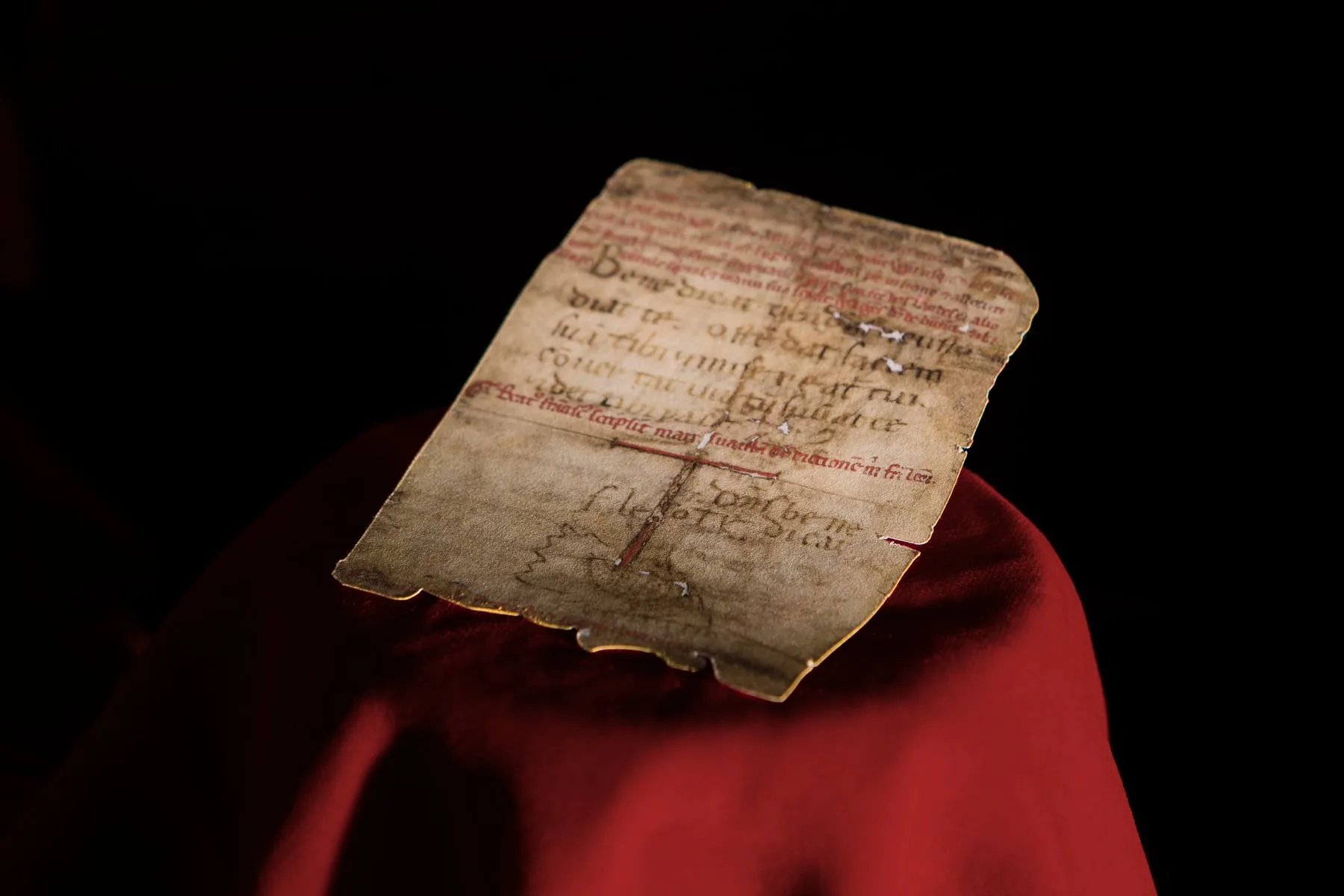
Kept at the Sacred Convent of Assisi, Brother Francis’s Chartula is one of the very few autograph testimonies of the Saint to have reached us. The parchment bears the Laudes Dei Altissimi and the Benedictio fratri Leoni, texts tied to the experience of La Verna in 1224 and to the relationship between Francis and Brother Leo. Its writing, its material support and its history of preservation make the Chartula a primary source of exceptional historical, palaeographic and spiritual value.
Read more
Brother Francis’s Chartula, kept in Assisi, is one of the most important documentary testimonies for approaching the historical figure of Francis directly.
It is a small sheet of parchment written on both sides. On one side Francis wrote the Laudes Dei Altissimi, a praise of God composed after the experience of La Verna; on the other the Benedictio fratri Leoni, addressed to Brother Leo, one of his closest companions.
The Chartula is traditionally connected with Francis’s stay at La Verna in September 1224, a central moment of his life and spiritual journey, tied to the receiving of the stigmata.
The document is also of particular relevance from a palaeographic point of view. The presence of the autograph writing allows Francis’s hand to be observed directly: the ductus, the layout of the text, the signs and the ways in which the word is entrusted to the parchment become elements of the source and contribute to its interpretation.
Alongside Francis’s hand there is also that of Brother Leo, whose attestation contributes to the documentary history of the Chartula and its transmission. The parchment thus becomes the testimony of a concrete relationship between two people, as well as the support of a text.
This twofold nature (textual and material) is essential to understanding the role of the source in the THEOPHANIA project. The content of the words can be transcribed, studied and translated; the original also preserves the unrepeatable elements of the act of writing.
It is on this documentary heritage that Scrinium developed the project Sacra Vestigia, Francis of Assisi, building a path of study, reproduction and valorisation of the source.
THEOPHANIA is a further step in this story: the documentary source enters into relation with the language of contemporary art and becomes the origin of a new visual research.
Before the work, then, there is the source. And before interpretation, the testimony.
The places of the source
The Chartula is not an isolated document: it is kept in a complex that has transmitted the experience of Francis for eight centuries. These are the places the itinerary sets out from.
-
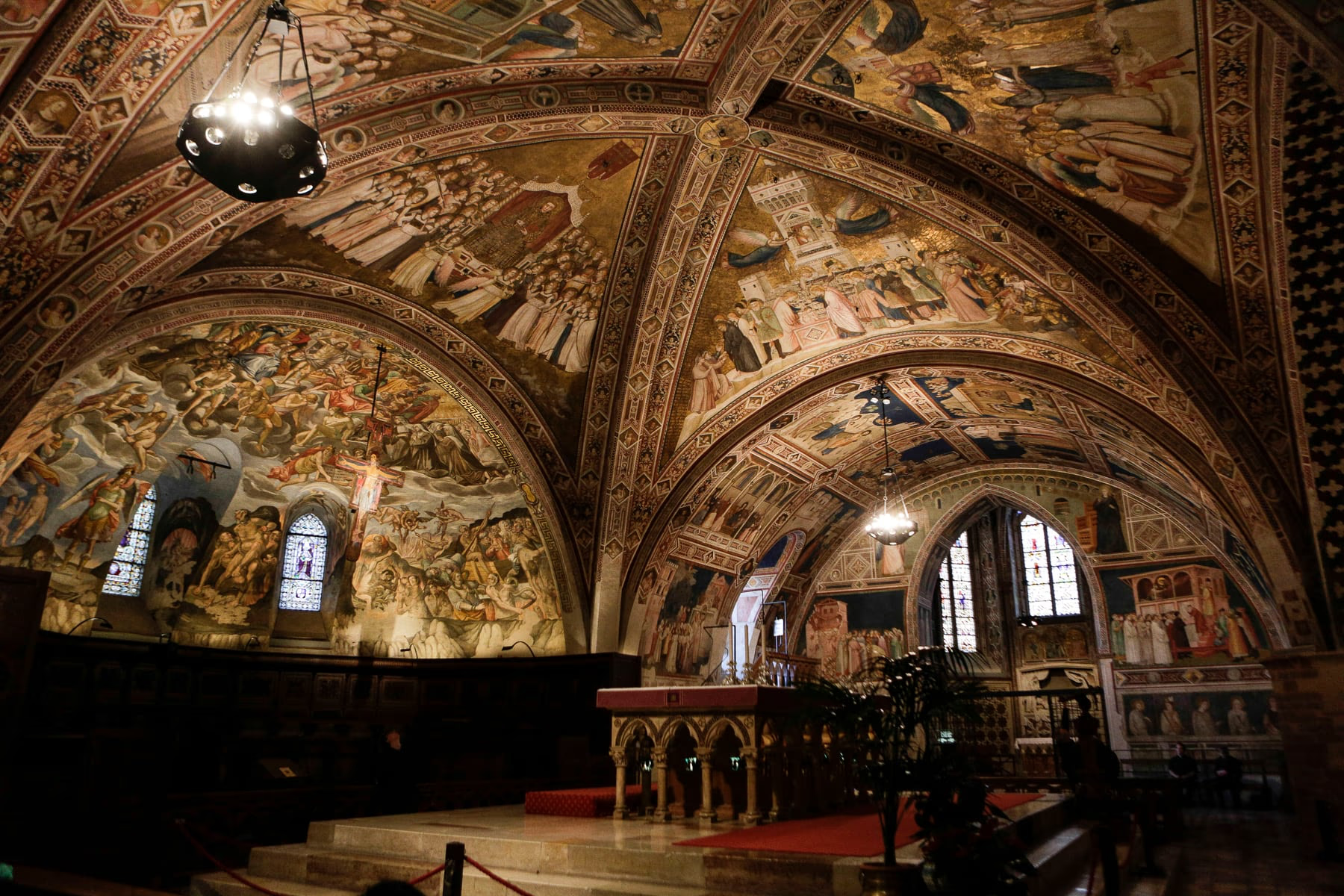
Lower Basilica of San Francesco, Assisi. Chapel of the Relics of Saint Francis. -
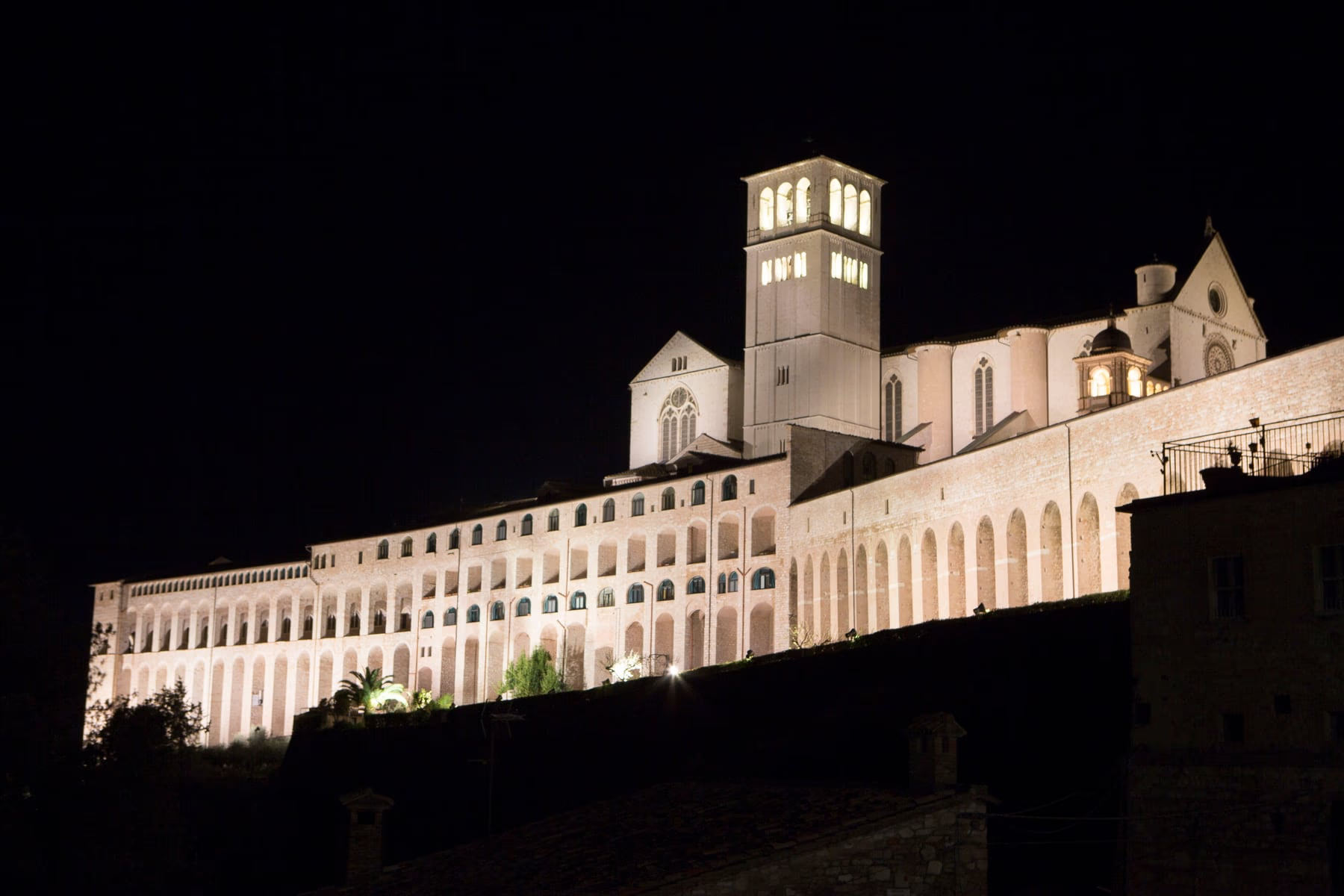
Basilica of San Francesco and Sacred Convent of Assisi. The monumental complex that preserves the Franciscan sources at the origin of the THEOPHANIA itinerary. -
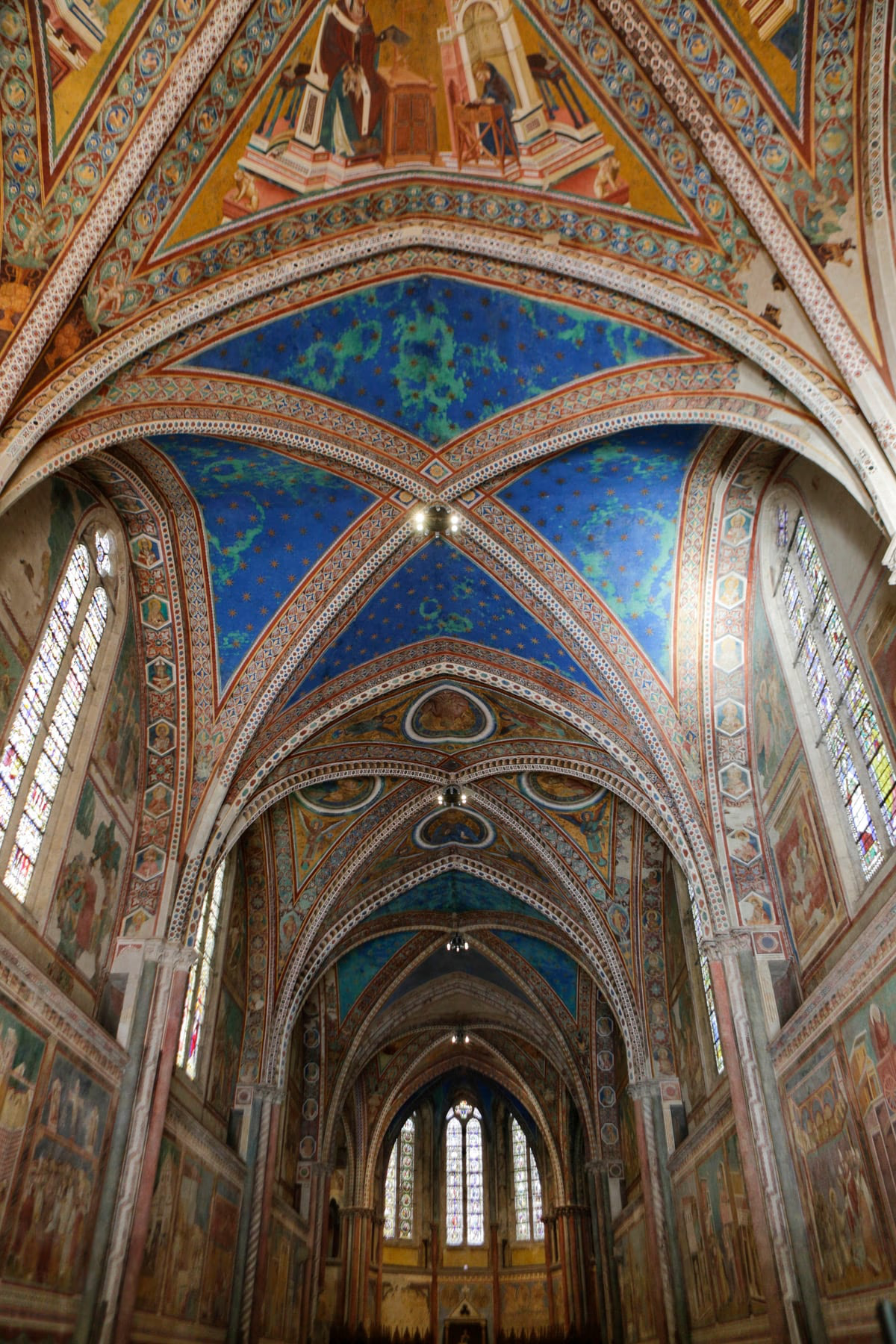
Upper Basilica of San Francesco, Assisi. View of the nave, one of the fundamental places in the visual and spiritual transmission of the experience of Francis.
Sacra Vestigia
The Chartula is not an isolated document. Sacra Vestigia is the research path it belongs to: the wider Franciscan documentary universe from which THEOPHANIA takes its start.
Open the documentary path Sacra Vestigia
Sacra Vestigia
From the source, a path begins
Sacra Vestigia, Francis of Assisi is born from Scrinium’s encounter with the Franciscan sources and from the will to restore their value through research, study, scholarly relationships and editorial production. Around the Chartula a project takes shape in which the source becomes the origin of new experiences of knowledge. It is in this path that THEOPHANIA sinks its roots.
Scrinium’s work is born from direct engagement with the sources. In those essential signs, the word does not describe the real: it crosses it and restores its unity.
Read more Sacra Vestigia
Sacra Vestigia, Francis of Assisi is the originating project from which the path leading to THEOPHANIA takes shape.
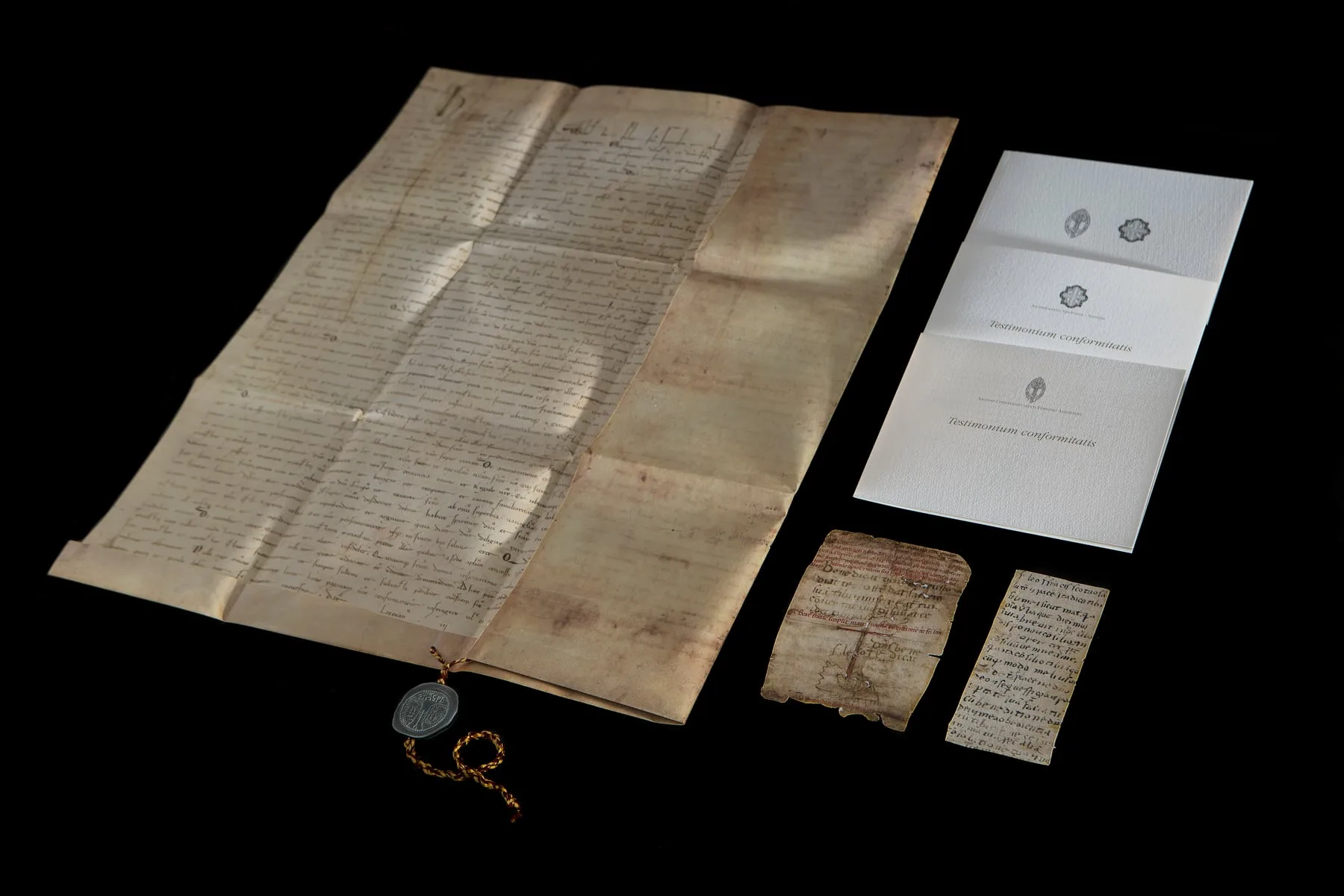
At its centre are the sources: the Chartula of Assisi, the Chartula of Spoleto and the Regula Bullata, studied in dialogue with the Sacred Convent of Saint Francis in Assisi and the International Society of Franciscan Studies.
Around these testimonies Scrinium has built a body of work in which research, reproduction, study, editorial production and relationships with scholars and institutions come together in their cultural valorisation.
The Chartula of Assisi holds a central position: the encounter with Francis’s autograph writing opens a space in which the document can be studied, made accessible and set once again in relation with the present.
Sacra Vestigia thus takes the form of a cultural process: the source generates research; research builds relationships; relationships open new possibilities of interpretation and restitution.
From this experience comes the possibility of entrusting the source to the gaze of a contemporary artist. With THEOPHANIA the path enters a new dimension.
Sacra Vestigia guards the origin. THEOPHANIA manifests one of its generative possibilities.
The Epistle to Brother Leo is the second of the only two surviving autographs of Saint Francis. It is a small but most precious fragment of parchment, of humble quality, on which Francis writes a message of spiritual comfort to Brother Leo.
-
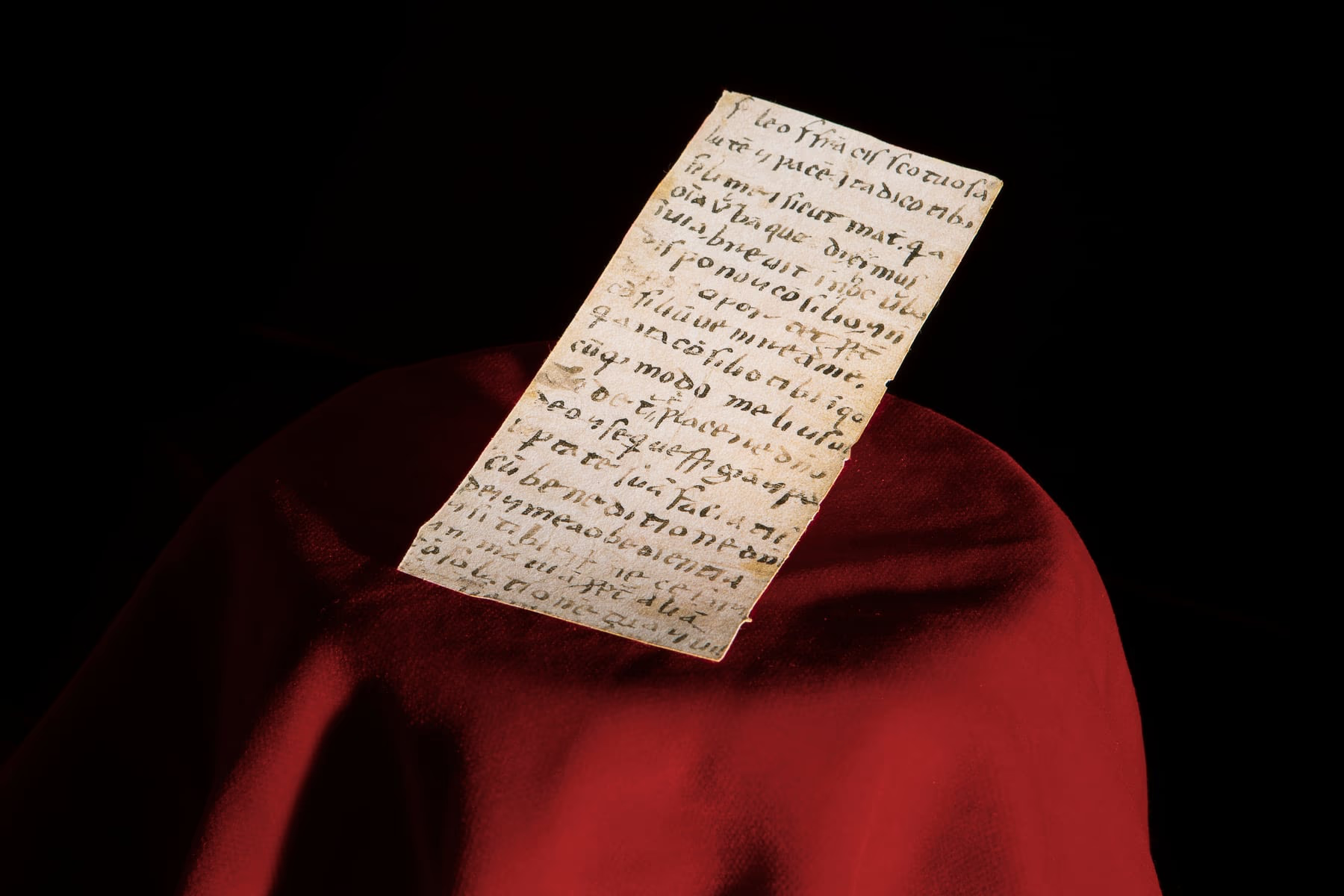
Chartula of Spoleto, Letter of Saint Francis to Brother Leo (autograph). Spoleto, Cathedral. -
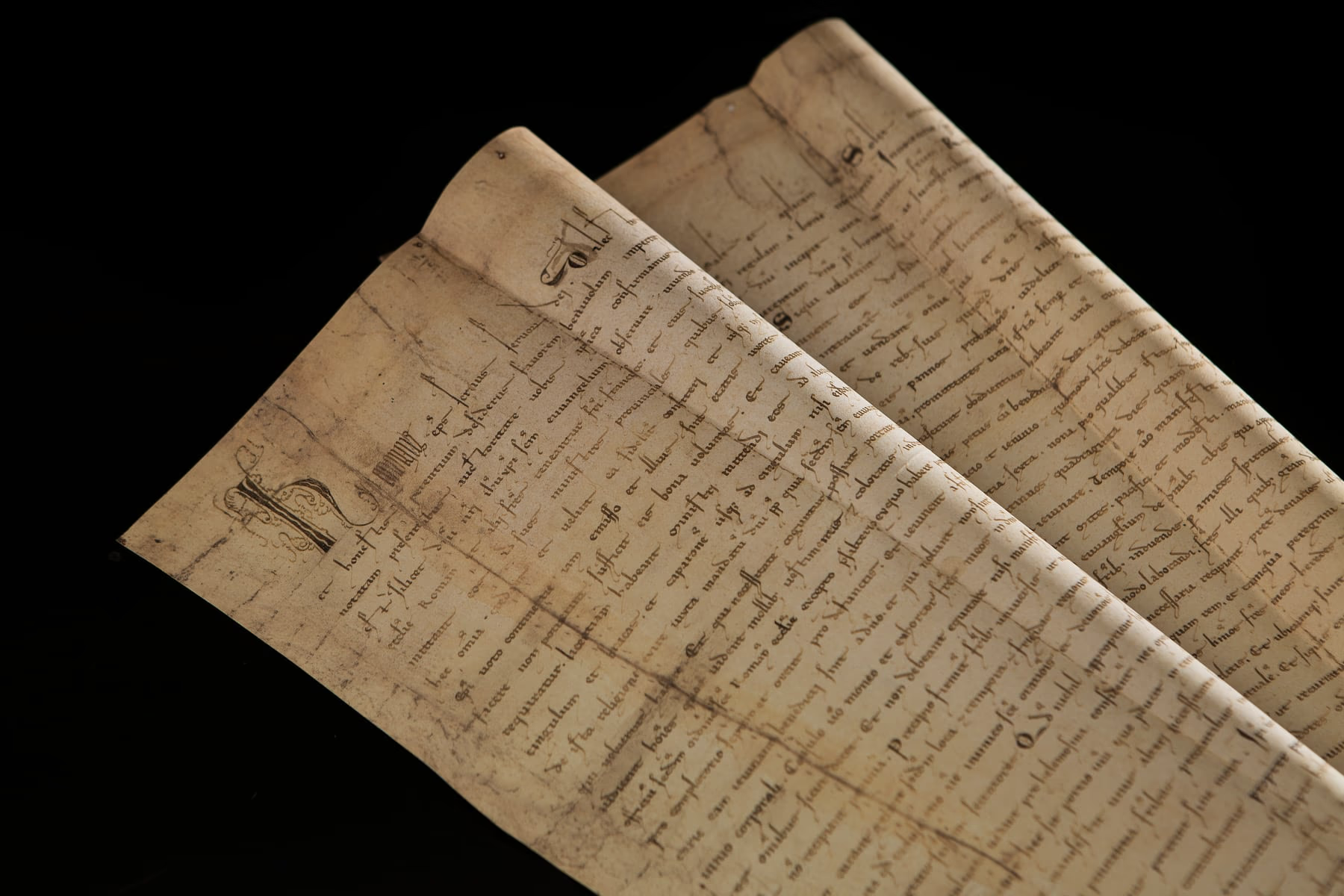
Detail of the Regola Bollata, letter of Honorius III confirming the rule of the Friars Minor. -
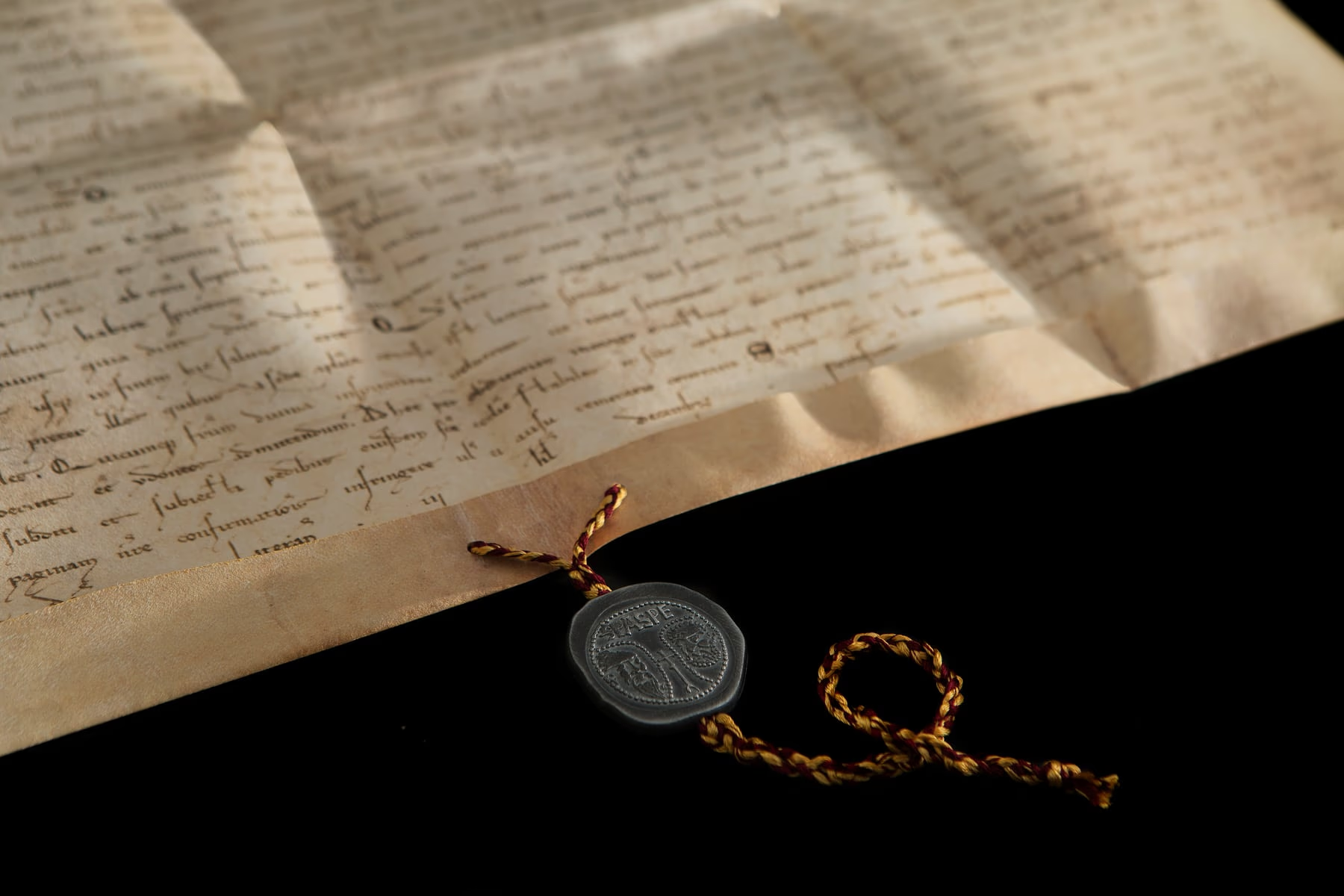
Regola Bollata, detail of the seal. -
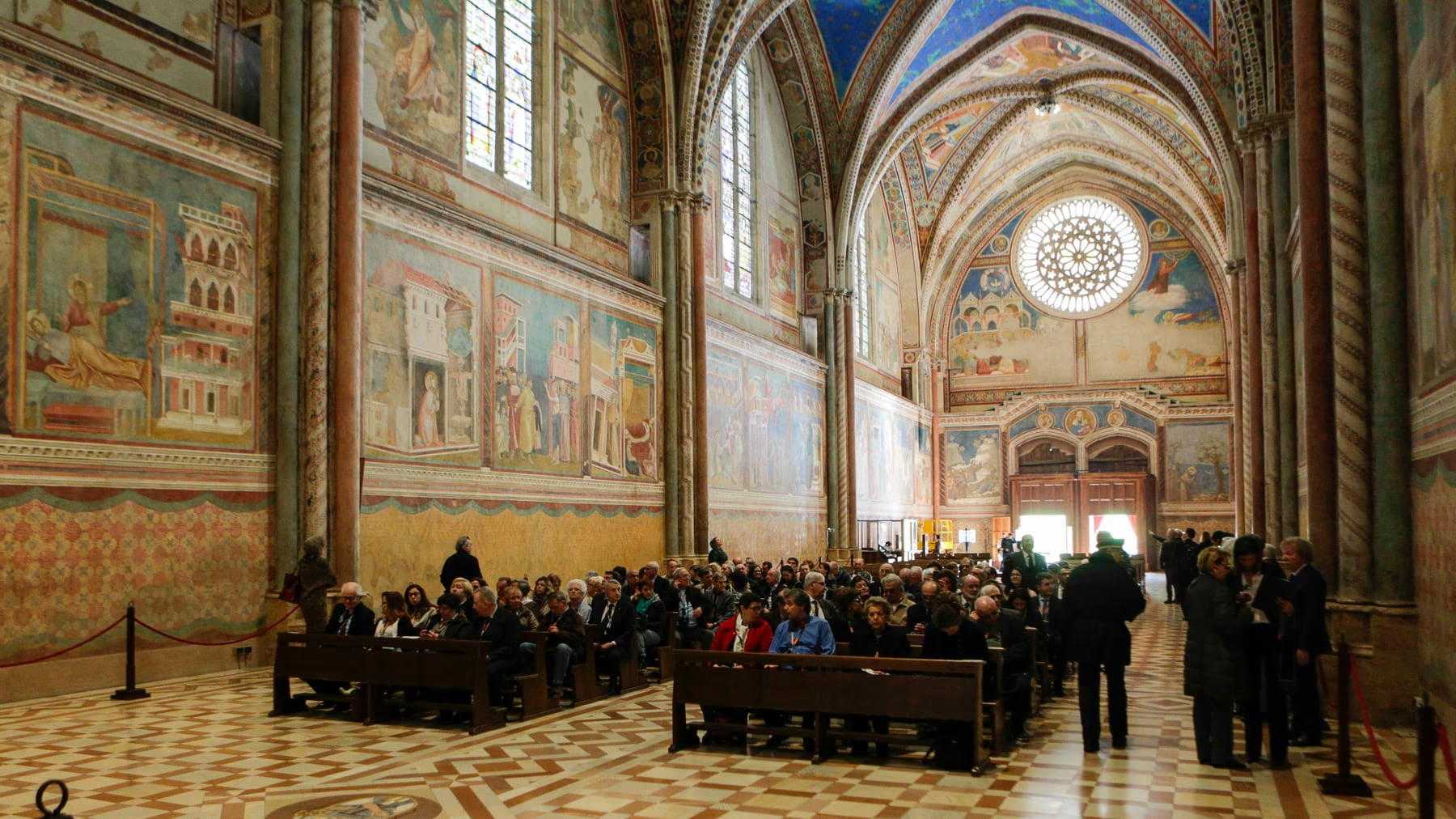
Sacred Convent of Assisi, official presentation of Sacra Vestigia.
Sacra Vestigia
Enter the documentary path
The Franciscan sources are not a closed archive: they are a path that continues. Leave your details to enter Sacra Vestigia.