The Project
THEOPHANIA is born from an entrustment.
The genesis
From an entrustment to an exhibition
After a research path on the Franciscan sources, Scrinium entrusts Giorgio Lupattelli with the encounter with the Chartula and its contemporary restitution. From this process the corpus of works is born, on which Gianluca Marziani builds the curatorial reading, and Palazzo Trinci welcomes the first museum manifestation.
800 years on. The source is still present.
Eight hundred years after the death of Francis of Assisi, THEOPHANIA questions the living presence of his legacy. The words, the gestures and the sources that preserve his testimony cross time and continue to generate research, relationships, art and new forms of knowledge.
Read more 800 years on. The source is still present.
The Franciscan Eighth Centenary gives THEOPHANIA a precise historical and cultural frame.
Eight centuries separate us from Francis of Assisi. His words, his gestures and the sources that preserve his testimony nonetheless continue to cross our time, generating questions able to speak to contemporary sensibility.
THEOPHANIA is born within this distance and from the possibility of crossing it.
The anniversary becomes an occasion to return to the sources, to meet them anew and to recognise their capacity to generate thought, relationships and expressive forms.
From this experience takes shape the dialogue between the autograph testimony of Francis, the project Sacra Vestigia, Francis of Assisi and the artistic language of Giorgio Lupattelli.
Eight hundred years thus become the measure of a permanence.
The source crosses time. Art receives its generative force and hands it back to the present through a new language.
THEOPHANIA inhabits this space: the point where memory and the contemporary meet once more and Francis can be questioned anew.
Eight centuries have transformed the world, its languages, the forms of knowledge. And yet some questions still belong to us.
THEOPHANIA is born from here: from the encounter between Francis and our own time, to understand what resonance his gaze on humanity, on creation and on relationship can still hold.
Read more
Every age meets Francis through its own questions.
Ours lives an extraordinary acceleration of knowledge, moves through an unprecedented quantity of images and information, explores matter, the cosmos and the processes of life ever more deeply. At the same time it seeks new forms of relationship with others, with nature, with time and with itself.
It is within this complexity that THEOPHANIA returns to Francis.
His experience is set in relation with some of the great questions of the present: the bond between humanity and creation, matter and transcendence, knowledge and limit, identity and relationship, speed and contemplation.
From this encounter the work of Giorgio Lupattelli takes shape. Art history, science, digital language and Franciscan iconography enter the same visual constellation, bringing unexpected correspondences between eras and forms of thought to the surface.
The question thus becomes part of the work.
What can Francis still tell us?
THEOPHANIA entrusts the answer to the visitor’s experience: to the possibility of pausing before the images, recognising the relationships that run through them and letting oneself be questioned by a presence that has reached us across eight centuries of history.
From the source to the work
A process of transformation
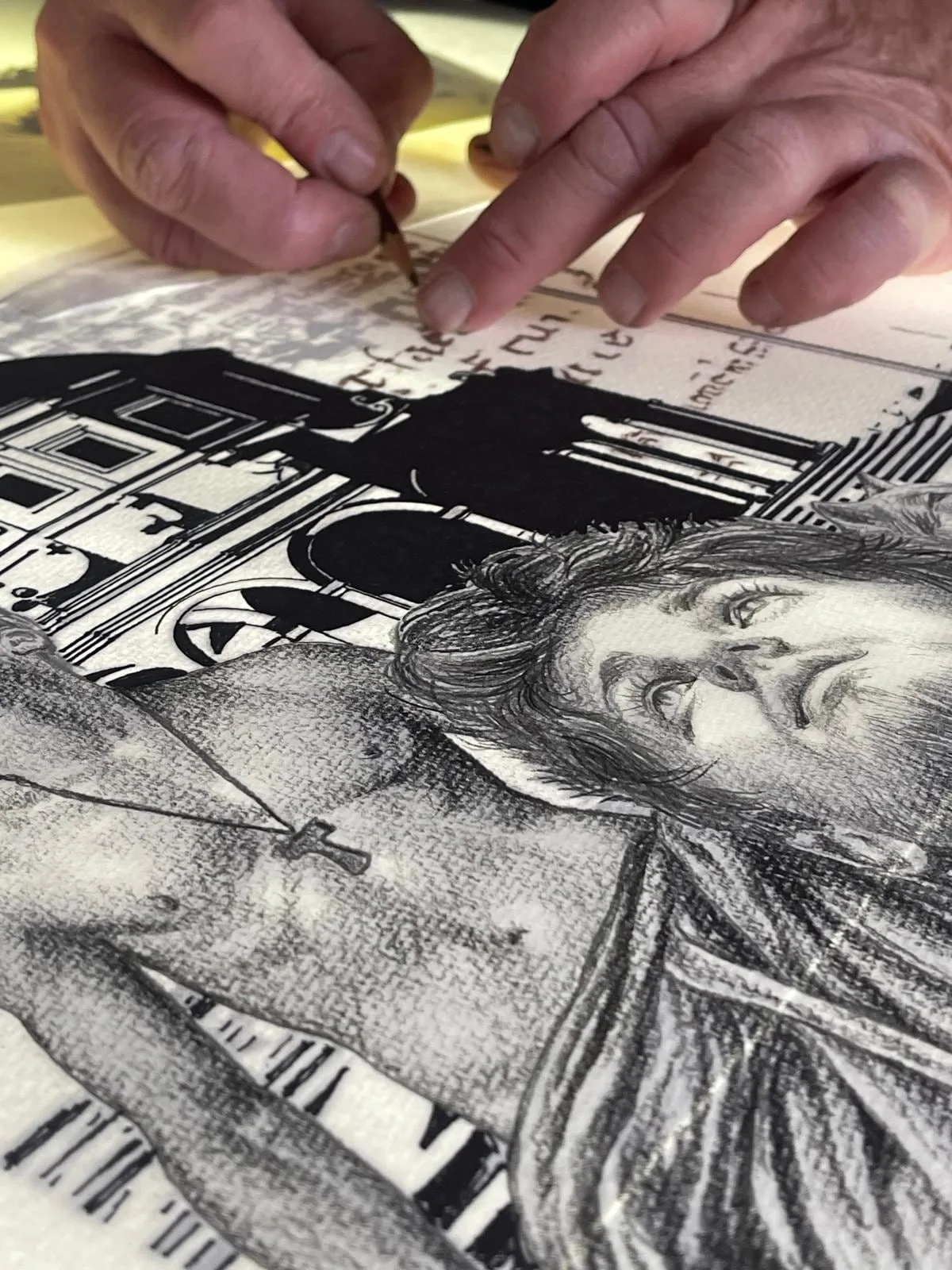
The source enters the artist’s creative space and meets the languages, images and knowledge of the present. Francis thus crosses art history, science, the cosmos and digital culture. THEOPHANIA takes shape through this process of transformation: the original testimony generates new relationships and finds in the work a contemporary possibility of expression.
Read more From the source to the work
The passage from the source to the work is one of the central moments of THEOPHANIA.
Giorgio Lupattelli takes on the commitment and builds around the figure of Francis a visual universe in which different eras and languages enter into relation. Franciscan iconography meets art history; images of the body converse with those of the cosmos; scientific formulas, biological structures and references to digital culture take part in the composition.
Shifts, overlaps and decompositions inspired by the aesthetics of the glitch bring the fragmented, rapid perception of the present into painting. The image holds that flow for an instant and gives the gaze back the possibility of pausing.
THEOPHANIA is born in this space of transformation: where a source crosses time and meets the artist’s autonomous gaze.
The name
What THEOPHANIA means
Theophania is a Greek word, ΘΕΟΦΑΝΕΙΑ: the manifestation of the divine, the moment in which what cannot be seen becomes visible. It is not a private vision nor an apparition: it is a coming into presence.
The project takes its name from here because it does the same with a source. The Chartula is a fragment of parchment, guarded and almost invisible; by crossing it, the work makes it present again. The manifestation is not the exhibition: it is the passage from the source to the work, and the exhibition is its public moment.
Scrinium and the Propositum Operis
Where THEOPHANIA comes from: the work on original sources, the method by which a sheet of archive paper becomes legible again, and the commitment Scrinium takes on so that a new work may be born from that source.
Open the origin and the process Scrinium
Propositum Operis
From the source, the possibility of a new work
Scrinium takes on the Propositum Operis of THEOPHANIA: it conceives the project starting from the path of Sacra Vestigia, entrusts the commitment to the artist and builds the relationships through which the source can meet new languages. Research, art, curatorship and the museum itinerary thus converge in a single cultural architecture.
Read more Propositum Operis
The Propositum Operis is the founding act through which a historical source of universally recognised value becomes the origin of a cultural project.
For Scrinium, taking on the Propositum Operis means building the scientific, institutional, artistic and relational context able to transform that source into new shared knowledge.
In THEOPHANIA the starting point is the work matured through Sacra Vestigia, Francis of Assisi. From this path comes the commitment entrusted to Giorgio Lupattelli and the building of the cultural and museum conditions within which the artist’s work and Gianluca Marziani’s curatorship find full expression.
The Propositum Operis holds together the origin, the relationships and the cultural direction of the process, while preserving the autonomy of the artist and the curator.
Scrinium
Where sources return to generate knowledge
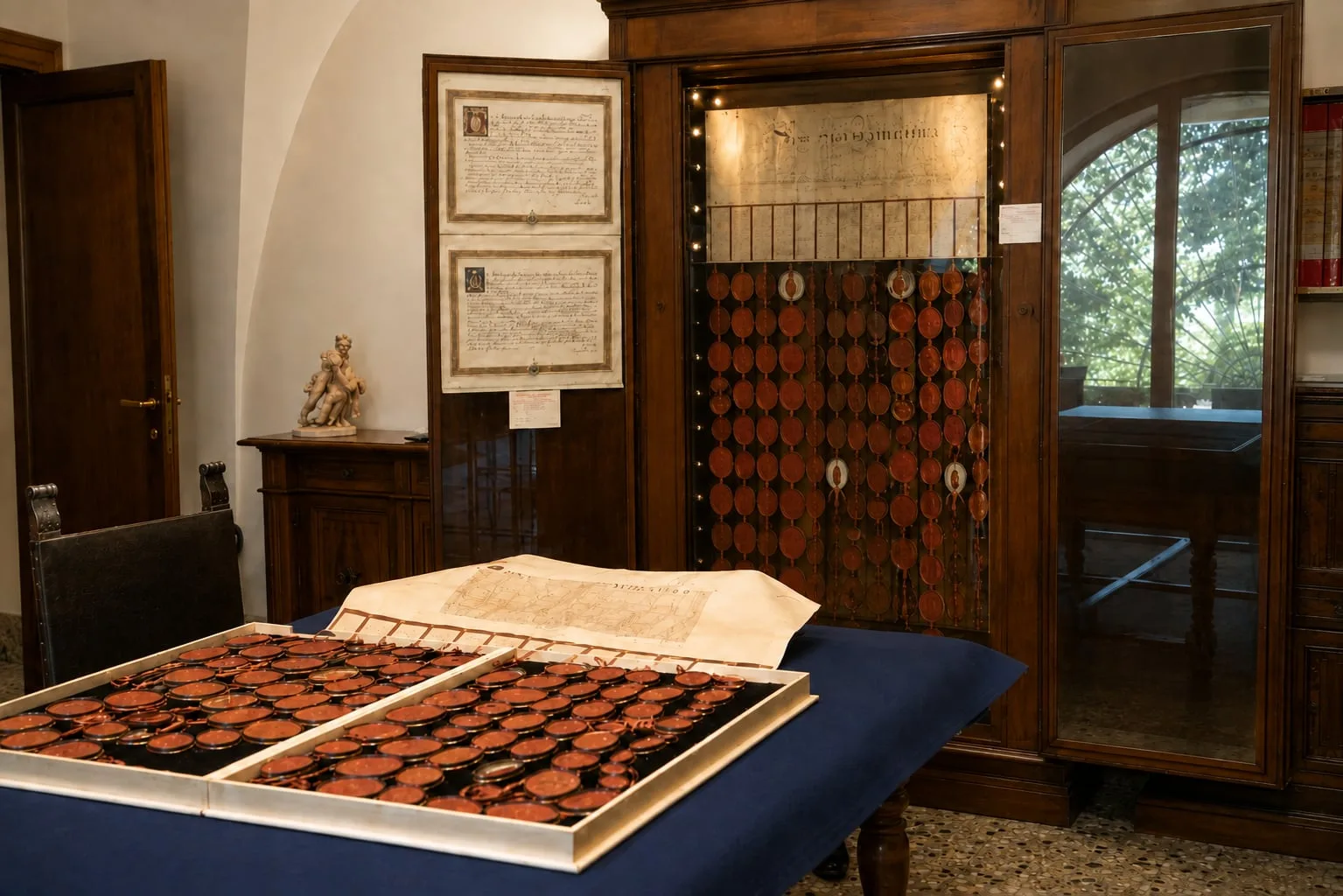
For over twenty years Scrinium has worked in the research, study and valorisation of documentary heritage, building projects in which scientific research, publishing, art and institutional relationships converge in a single cultural architecture. THEOPHANIA is born within this path and the principle that guides it: the Propositum Operis.
- Identification and study of the original source
- Establishment of the project’s Scientific Committee with the institution that holds the source
- Historical, philological and documentary research
- Diplomatic edition and scientific reconstruction
- Valorisation through publishing, exhibitions, art, education and cultural programmes
- Building of institutional relationships able to amplify the diffusion of knowledge
Read more Scrinium
Scrinium takes on the responsibility of transforming historical sources of universally recognised value into cultural projects able to generate new knowledge.
Every project begins with the encounter with an original source and develops through historical, philological and documentary research, scientific reconstruction, publishing and cultural valorisation, involving custodian institutions, scholars and different fields of expertise.
The experience gained has led Scrinium to define the Propositum Operis: the founding act through which a historical source becomes the origin of a cultural project.
The method has been applied to projects such as Processus contra Templarios, Causa Anglica, Ego Marcus Paulo (The Testament of Marco Polo, Sacra Vestigia) Francis of Assisi and Sacra Vestigia, Anthony of Padua.
THEOPHANIA is born from this trajectory: research is the starting point; valorisation its natural fulfilment, restoring knowledge to society through new forms of relationship.
The work on the sources
THEOPHANIA does not come from nowhere. It comes from years of work on the originals: archives, documents, seals, facsimiles. It is the craft from which the Propositum Operis comes, and the reason why the source, here, is a starting point and not a quotation.
-
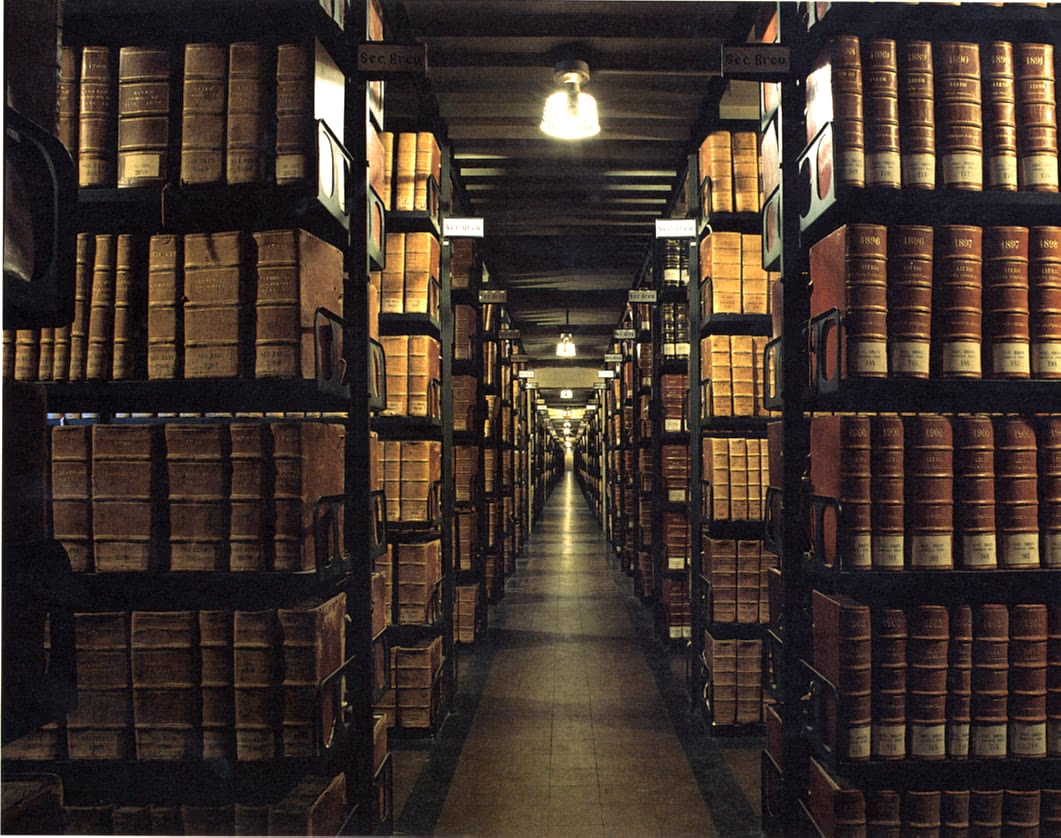
Vatican Apostolic Archive. Repositories and documentary series. -
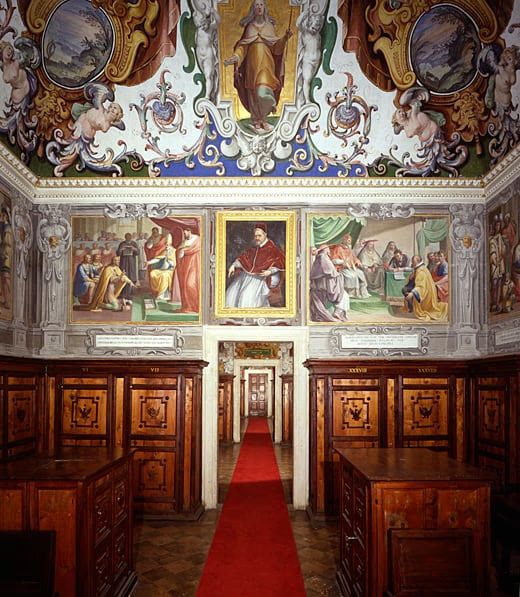
Vatican Apostolic Archive, Pauline rooms, room III. -
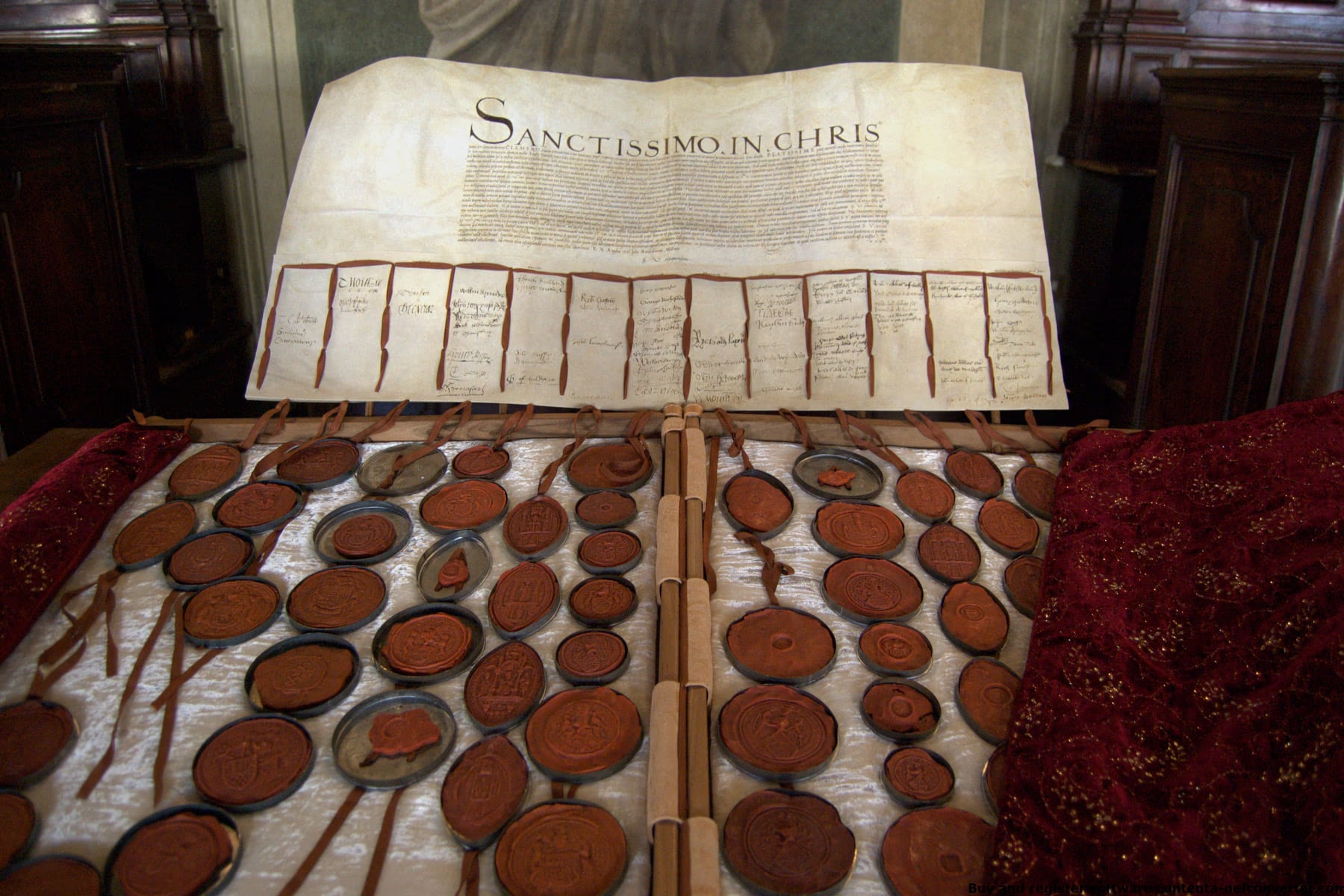
Exemplaria Praetiosa Archivi Secreti, Causa Anglica: the troubled matrimonial case of Henry VIII. -
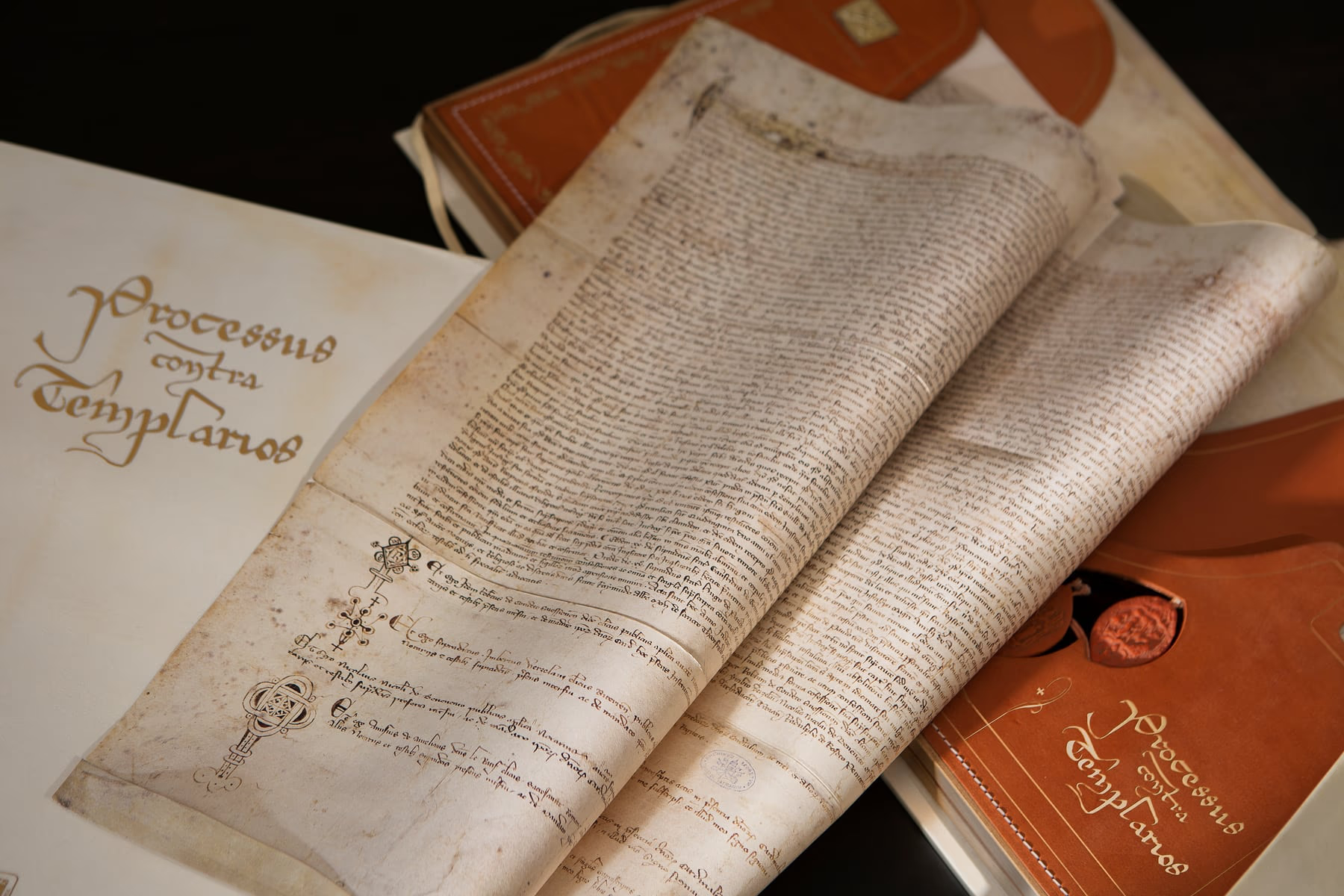
Processus contra Templarios. -
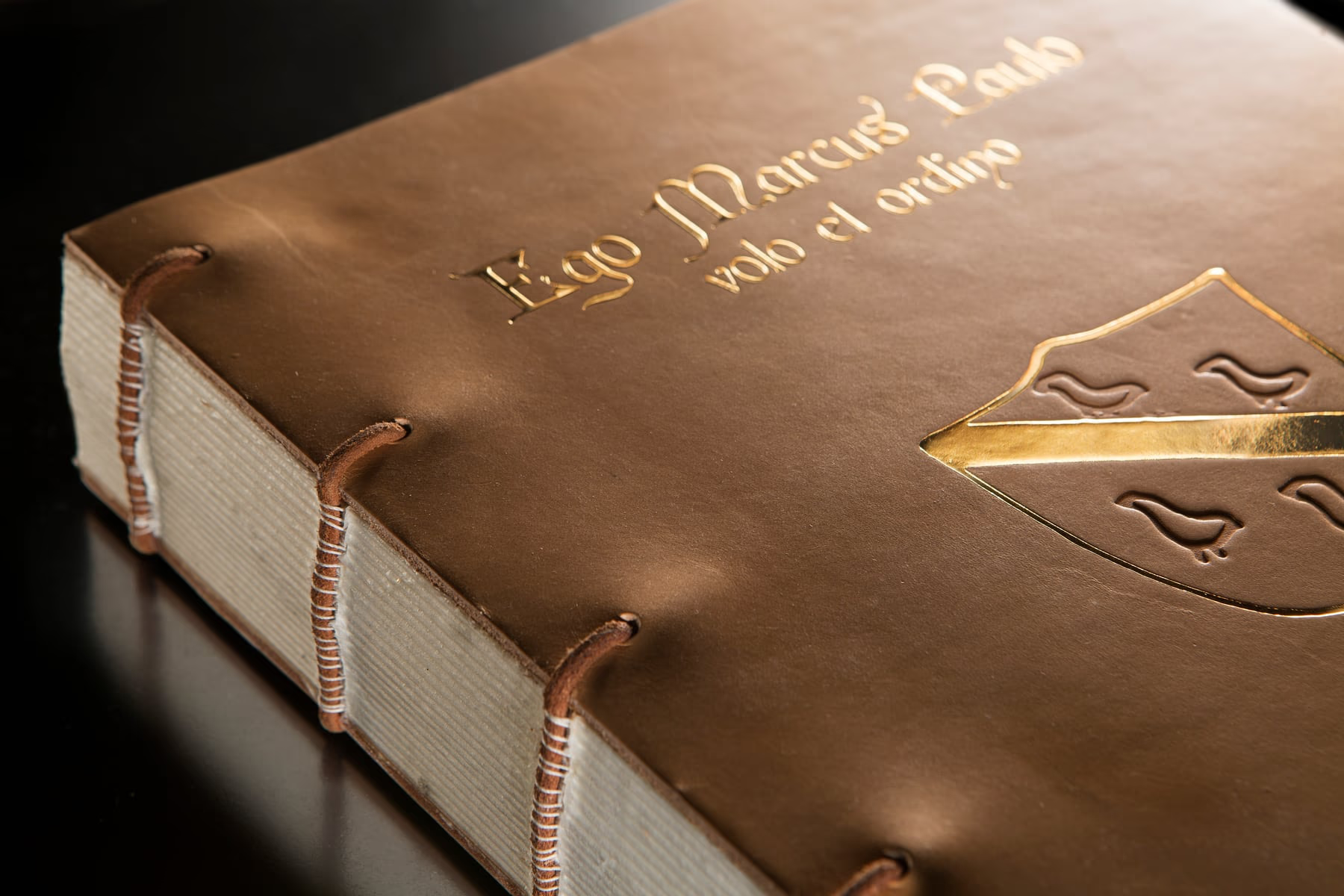
Ego Marcus Paulo volo et ordino: the secrets of Marco Polo’s will. -
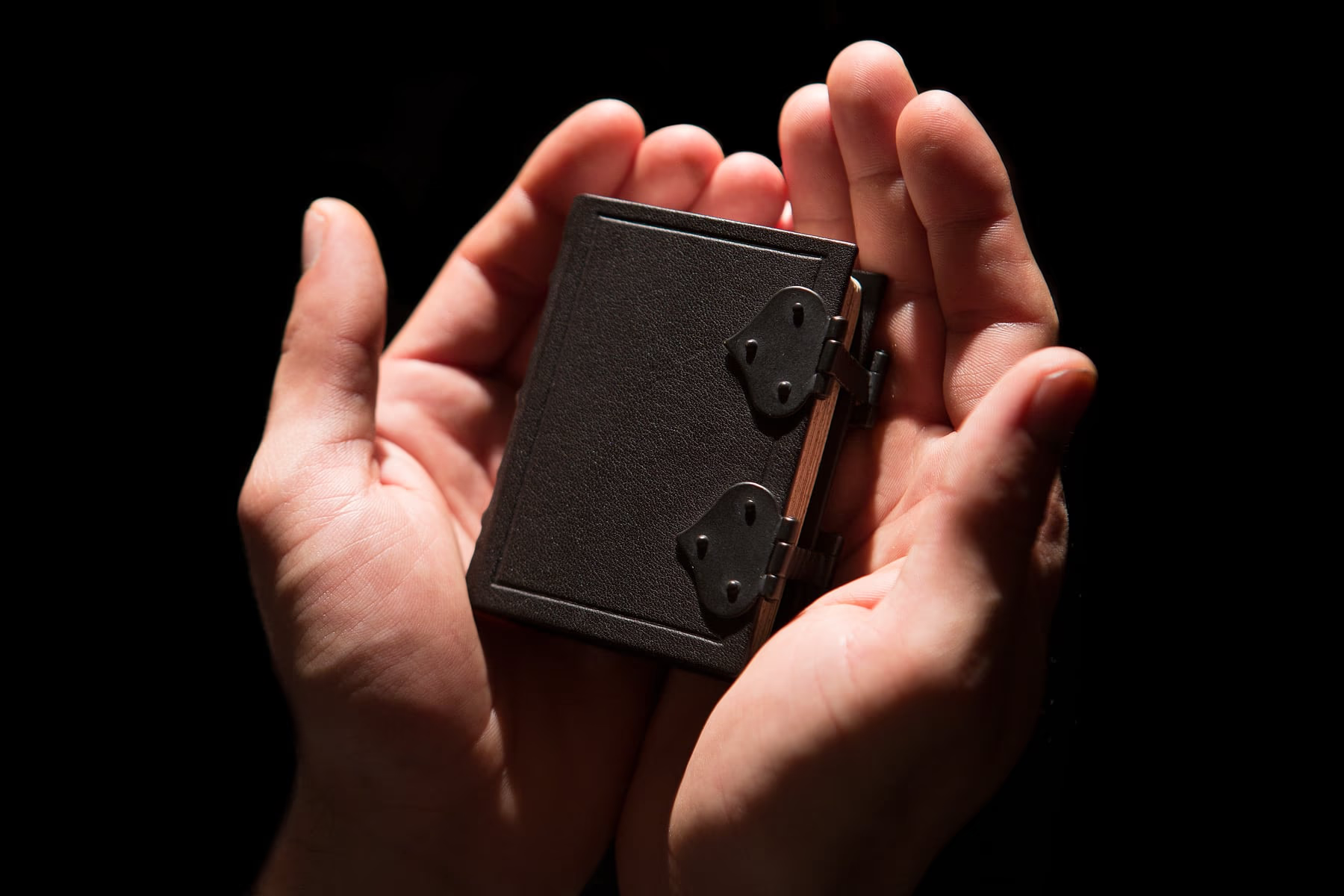
Sketchbook of Francesco di Giorgio Martini, Codicum Facsimiles. -
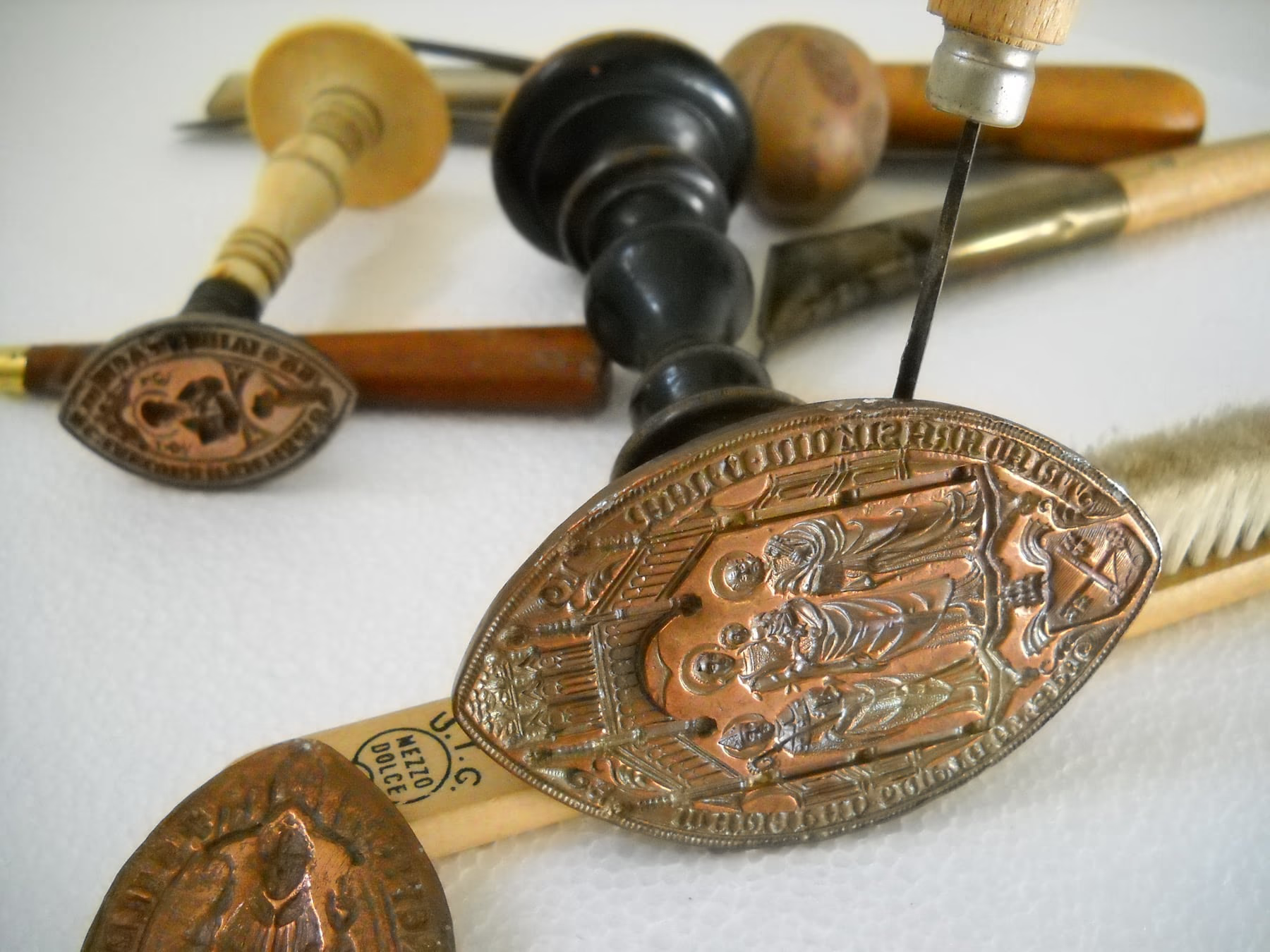
Seal matrices and tools for reproduction. -
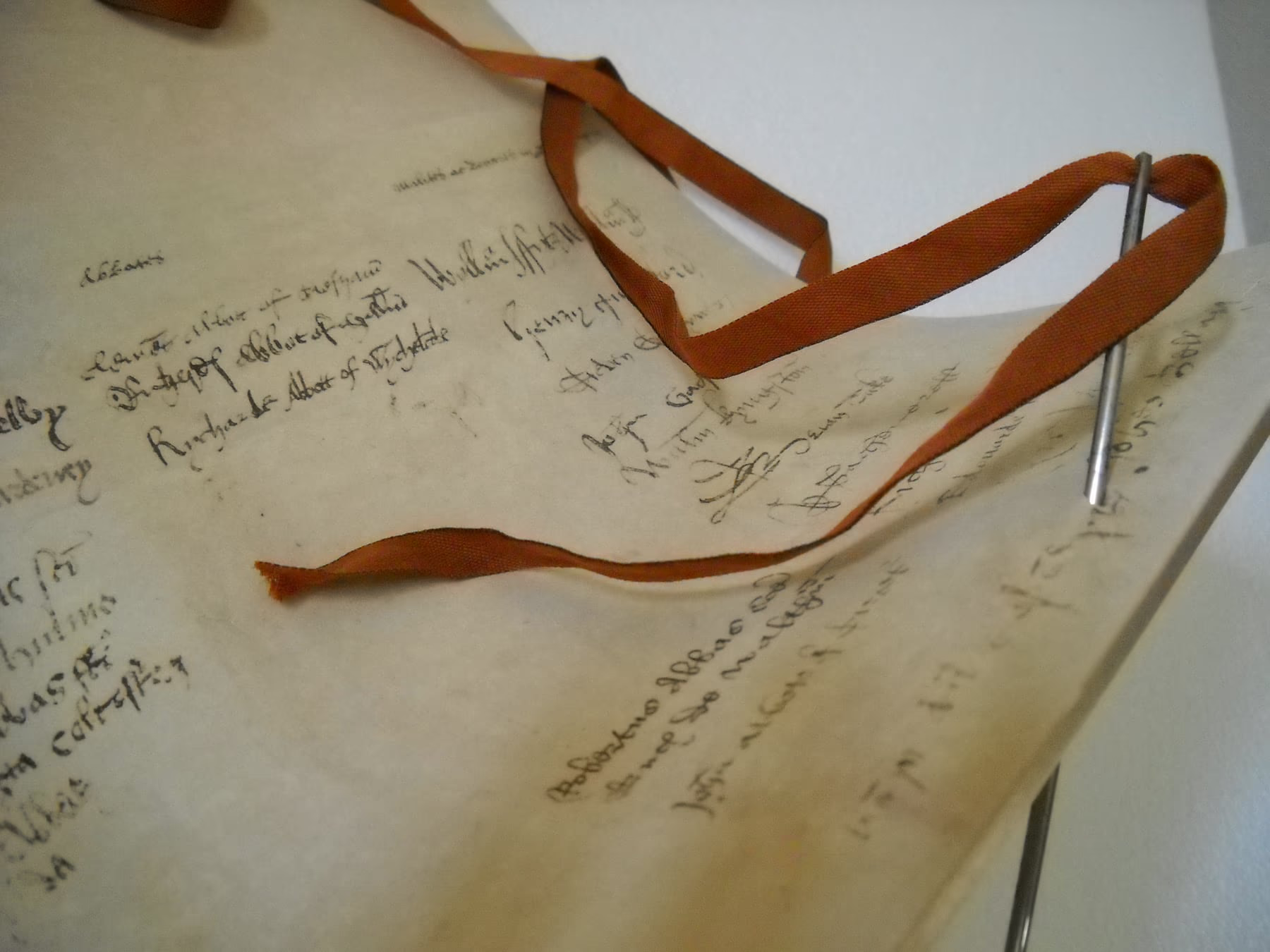
Causa Anglica, manual working phase and preparation of the support for the restitution of the historical document. -
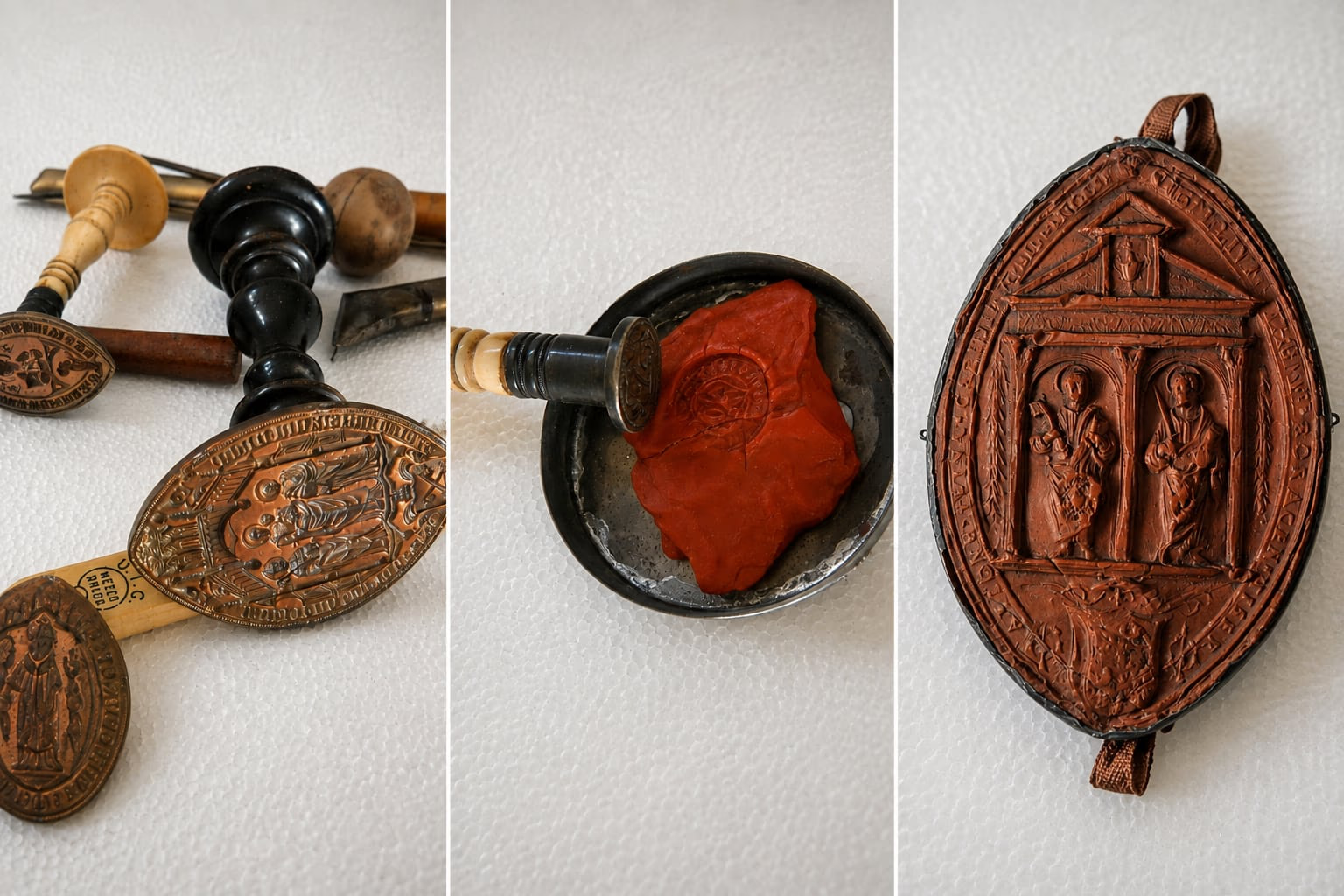
Historical sealing tools and metal matrices used in the study and reproduction of the Causa Anglica seals. -
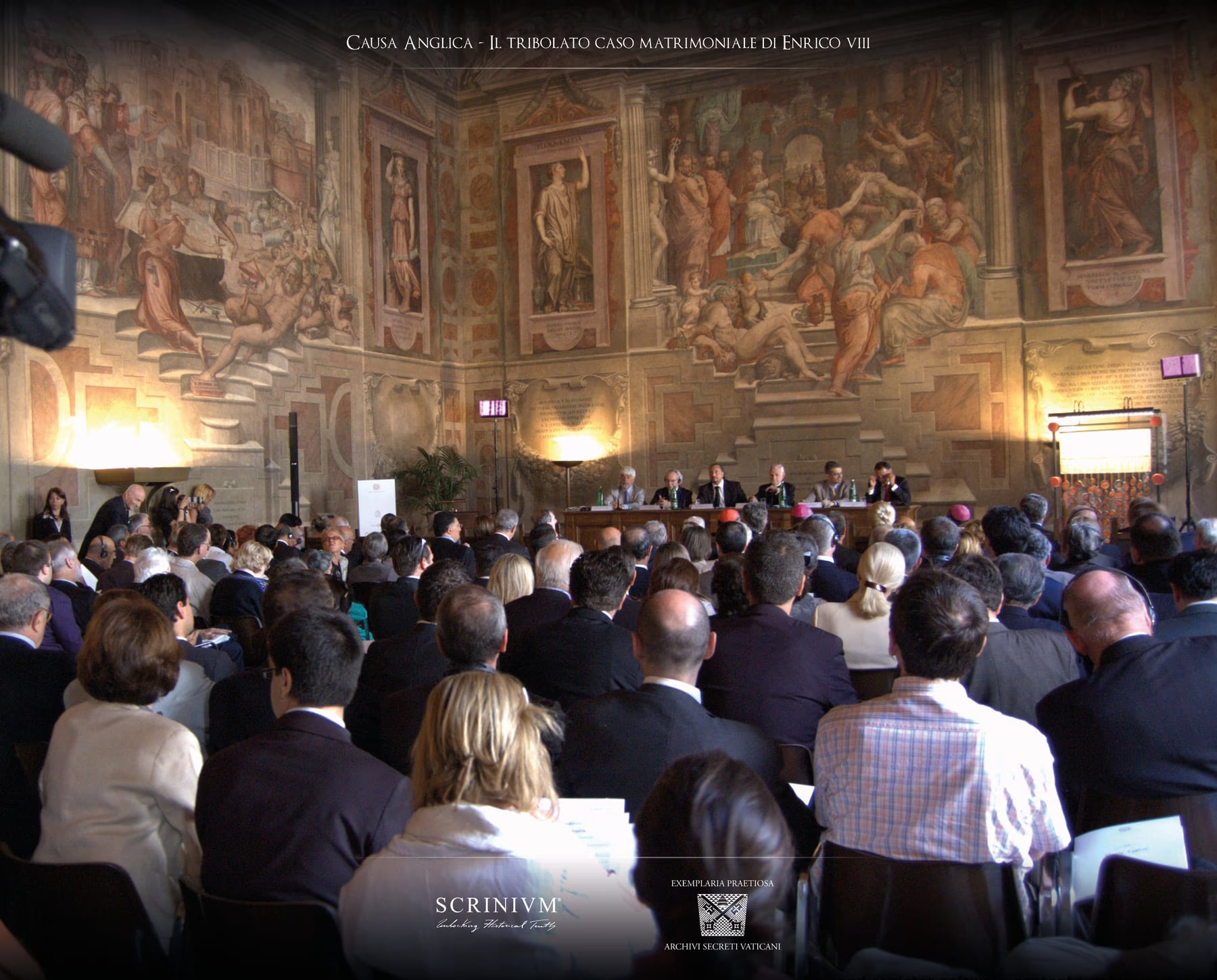
Palazzo della Cancelleria, seat of the Sacra Rota, Sala dei Cento Giorni. Official presentation of Causa Anglica. -
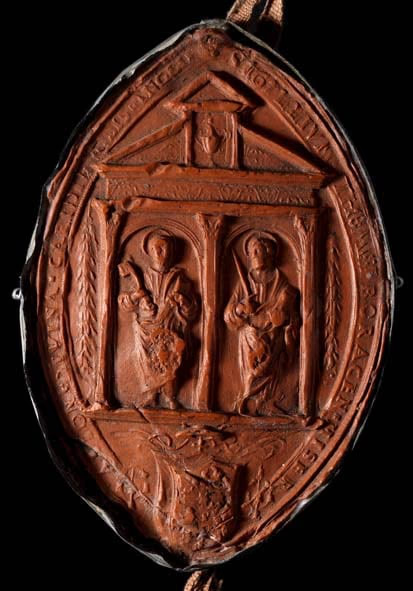
Seal of Thomas Wolsey. -
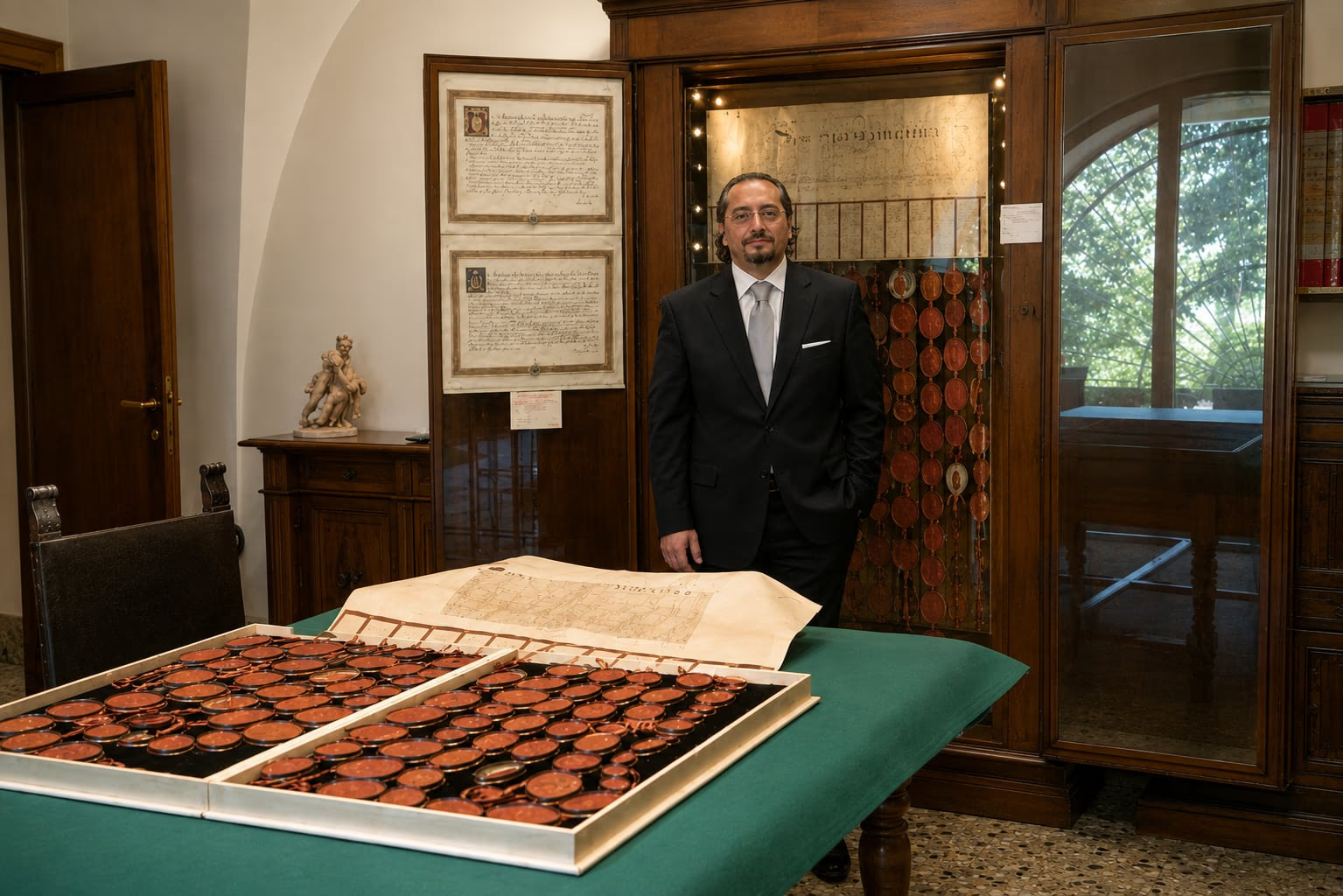
Scrinium, the presentation of a work.
Scrinium
From the original source to the project
Archives, seals, facsimiles: the work Scrinium has carried out on the originals for years, and that THEOPHANIA makes visible. Leave your details and we will present the projects to you.