Major work · 1 of 28
THEOPHANIA
The face that crosses time
Credits: Giorgio Lupattelli / Scrinium.
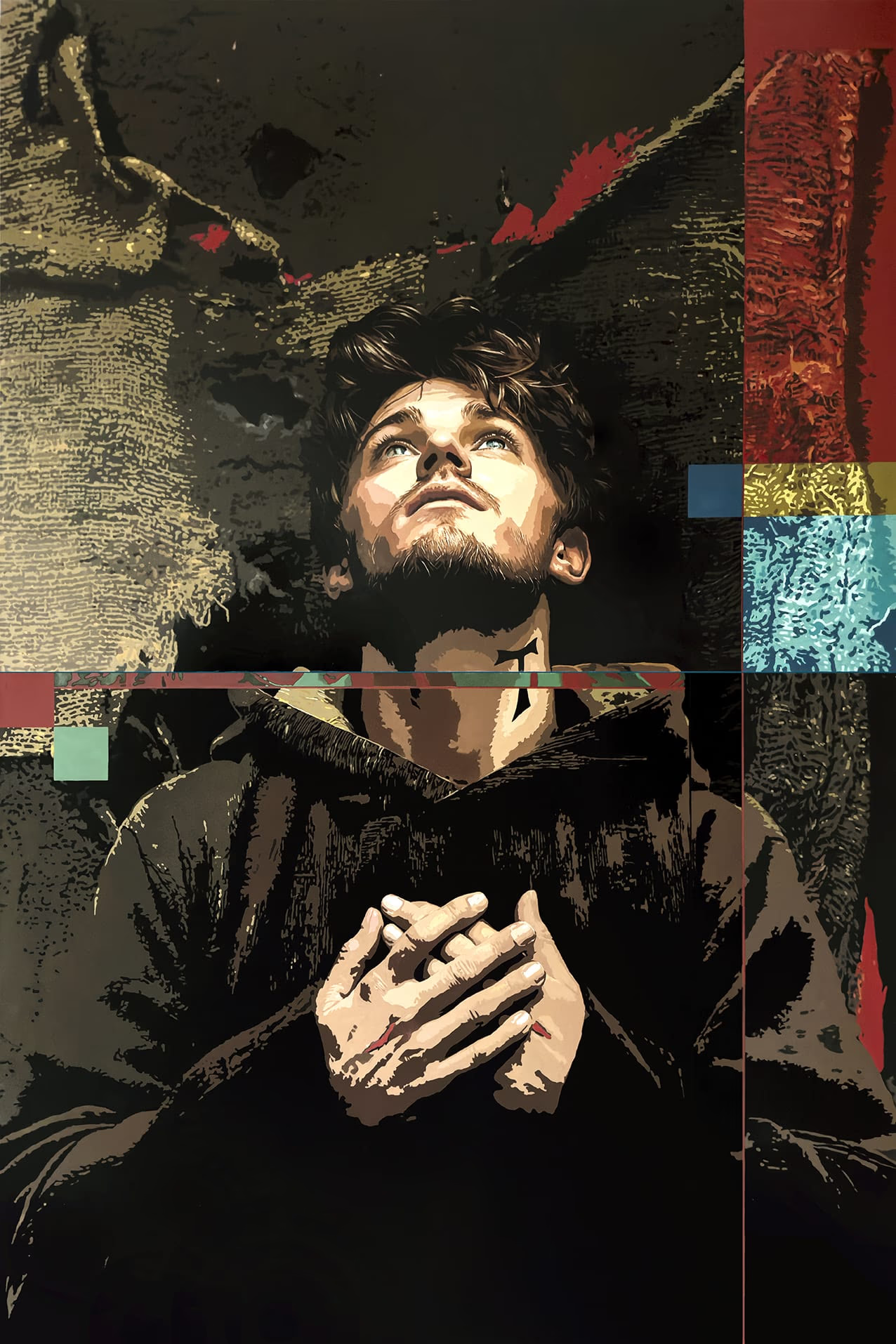
THEOPHANIA opens with a face. It is not a historical reconstruction of Francis of Assisi, but the image of a presence that continues to question the present. The breaking up and slippage of the image, inspired by the aesthetics of the glitch (the visual interference typical of digital language), turn the painting into a freeze frame: a pause in the continuous flow of images that runs through our daily lives. Light, matter and the dialogue with Burri thus invite visitors to slow down their gaze and to rediscover what, all too often, they look at without seeing.
Giorgio Lupattelli
THEOPHANIA (The face that crosses time)
2026, Acrilico su Tela, cm. 120 x180
- Room
- Sale di Messalina, Room 1
- Sequence in the exhibition
- 1 of 28
- Inventory
- OP-025
- Credits
- Giorgio Lupattelli / Scrinium
- Rights
- Rights of use, exhibition and reproduction: Scrinium.
In depth
Every age has imagined the face of Francis according to its own sensibility. The images handed down by tradition often portray him marked by poverty, suffering and asceticism. Giorgio Lupattelli chooses a different path.
His Francis is not meant to be a historical reconstruction of the person, but an image capable of speaking to men and women of today. It is a face in which everyone can recognise something of themselves, regardless of the age in which they live.
The figure emerges as a half length portrait, the gaze turned upwards, towards the light. It is not the gesture of someone fleeing the world, but of someone who continues to search for its meaning. The light does not illuminate the face alone: it becomes the symbol of a search that runs through an entire existence.
In the background appears a work by Alberto Burri, built from poor materials such as jute and iron. Matter, with its wounds and its imperfections, enters into dialogue with the face of Francis, suggesting that fragility too can become a place of transformation.
The contrast between the figure and the background recalls, in its intensity of light, the great Caravaggesque tradition. Lupattelli, however, uses the language of acrylic to construct clean surfaces, essential fields of colour and progressive breakings up of the image. The face never appears entirely defined: it seems to emerge from the matter and, at the same time, to dissolve into it.
The stigmata and the Tau are not presented as mere iconographic attributes. They become the signs of an identity built through a journey, rather than elements intended to identify a saint.
With this first work THEOPHANIA immediately sets out its own method. It does not invite us to contemplate an image of the past, but to enter into relationship with a presence that continues to question the present.
The face of Francis is not only the protagonist of the itinerary. It becomes the place in which every visitor is called to measure themselves against their own questions.
The whole cycle is born of this relationship. The works that follow will explore the cosmos, time, the body, knowledge, nature and the symbol. All of them will set out from this initial gaze, which offers no definitive answers but opens a dialogue.
In this sense Opera Maior is not merely the first painting in the exhibition. It is the threshold through which the visitor enters the universe of THEOPHANIA.