Panel and study · 20 of 28
Compimento senza fine
Credits: Giorgio Lupattelli / Scrinium.
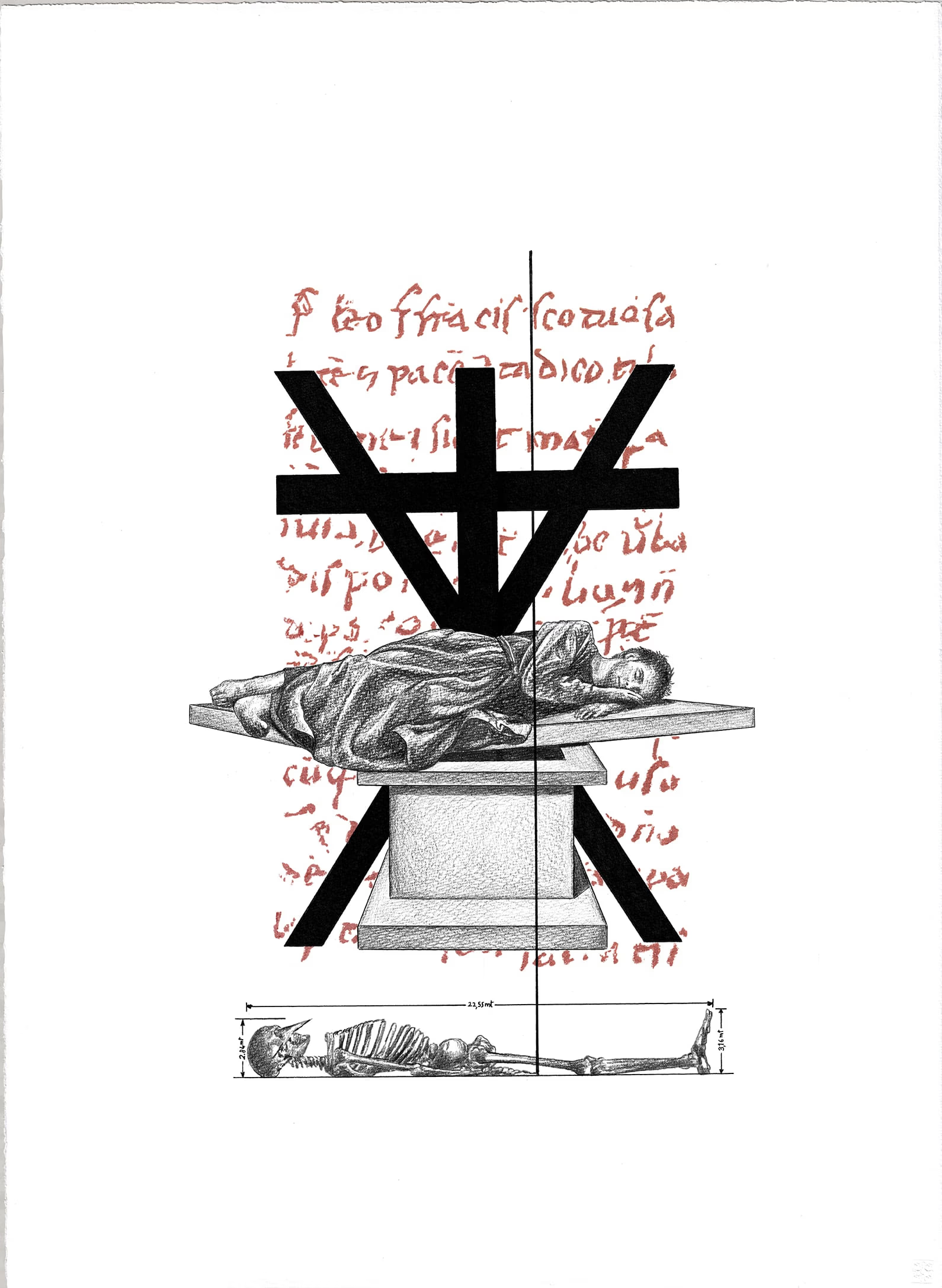
Francis is depicted on an open tomb that recalls the tradition of the Resurrection, while in the background appear works by Gino De Dominicis devoted to the theme of immortality. The work reflects on the meaning of fulfilment: what appears to be an ending can become the beginning of a new possibility. Life is represented as a journey that continues beyond every apparent conclusion.
Giorgio Lupattelli
Compimento senza fine
2026, Mixed media: charcoal, pencil, ink, watercolour on laid paper with untrimmed edges, cm. 50 x 70 (approx.)
- Room
- Sale di Messalina, Room 2
- Sequence in the exhibition
- 20 of 28
- Inventory
- OP-004
- Credits
- Giorgio Lupattelli / Scrinium
- Rights
- Rights of use, exhibition and reproduction: Scrinium.
In depth
Francis lies on an open tomb whose form recalls the one depicted by Perugino in his Resurrection scenes. The image does not dwell on the theme of death, but on the space that death opens.
The tomb becomes a threshold. It does not represent the end of a journey, but rather the place in which every conclusion can be transformed into a new beginning.
Around this image a dialogue unfolds with the work of Gino De Dominicis, an artist who devoted much of his research to the relationship between time, immortality and the limit of the human condition.
In the background appears Immortalità, while in the lower part the project of the Calamita Cosmica is recalled, one of De Dominicis’s most significant works. In neither case does the reference have an illustrative function: it introduces a reflection on the human desire to go beyond the limit and to question what endures beyond time.
The encounter between Francis and De Dominicis thus constructs an unexpected dialogue between two very distant languages. On one side the Christian tradition, in which death represents a passage; on the other a contemporary artistic research that explores the mystery of immortality through symbol and matter.
THEOPHANIA does not seek to superimpose these perspectives. It places them in relation, allowing a shared question to emerge: what does fulfilment mean?
The work suggests that fulfilment does not coincide with the closing of an experience. Every goal reached holds within it the possibility of a new opening, every conclusion generates a transformation, every ending points to a continuity that exceeds measurable time.
Francis thus becomes the figure who crosses this threshold. His presence does not indicate a definitive answer, but invites us to contemplate fulfilment as an always open process, in which life continues to generate meaning.
OP-016 · Ink on paper · cm 29,7 x 42
The preparatory study
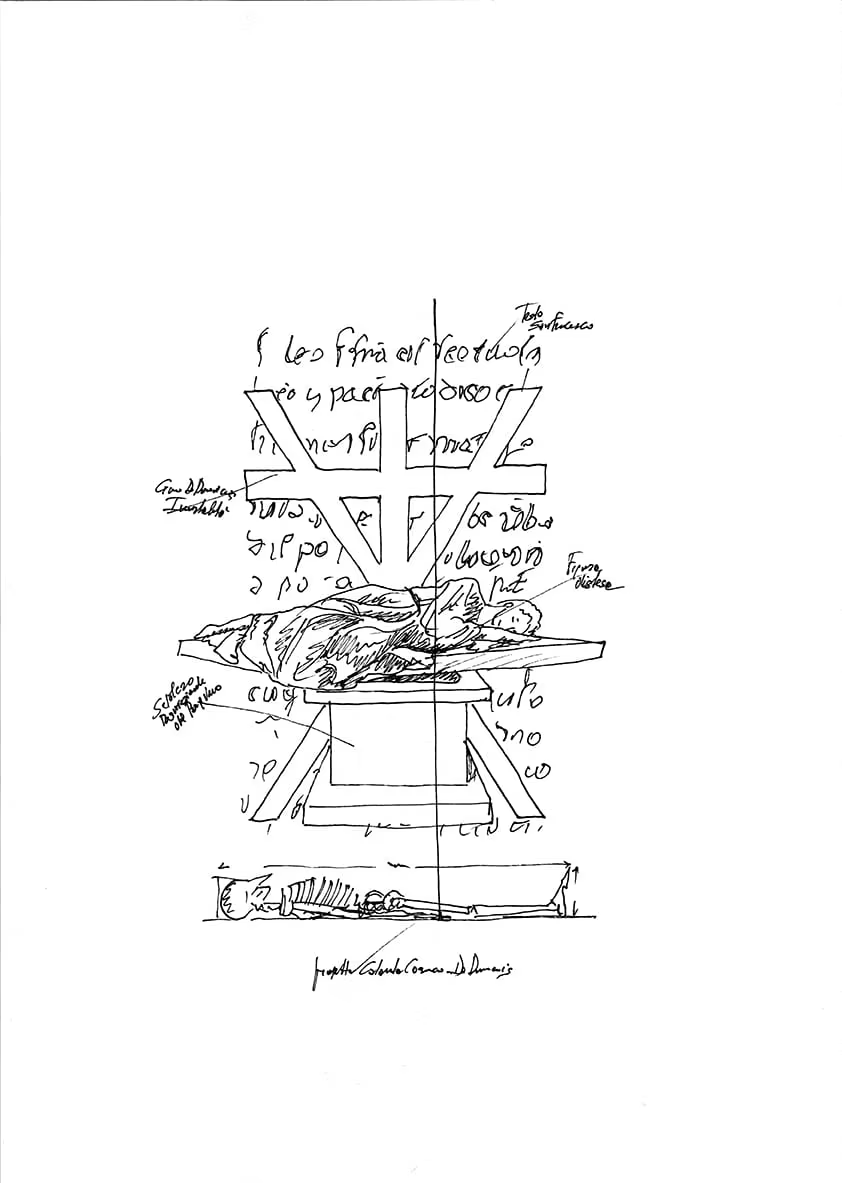
The sheet from which the panel is born: the same composition still in the state of line, with the artist’s handwritten notes naming the symbols before they become image.
Giorgio Lupattelli
Study for Compimento senza fine
2026, Ink on paper, cm 29,7 x 42
- Room
- Sale di Messalina, Room 1
- Sequence in the exhibition
- 8 of 28
- Inventory
- OP-016
- Credits
- Giorgio Lupattelli / Scrinium
- Rights
- Rights of use, exhibition and reproduction: Scrinium.