Panel and study · 23 of 28
Il corpo come luogo del divino
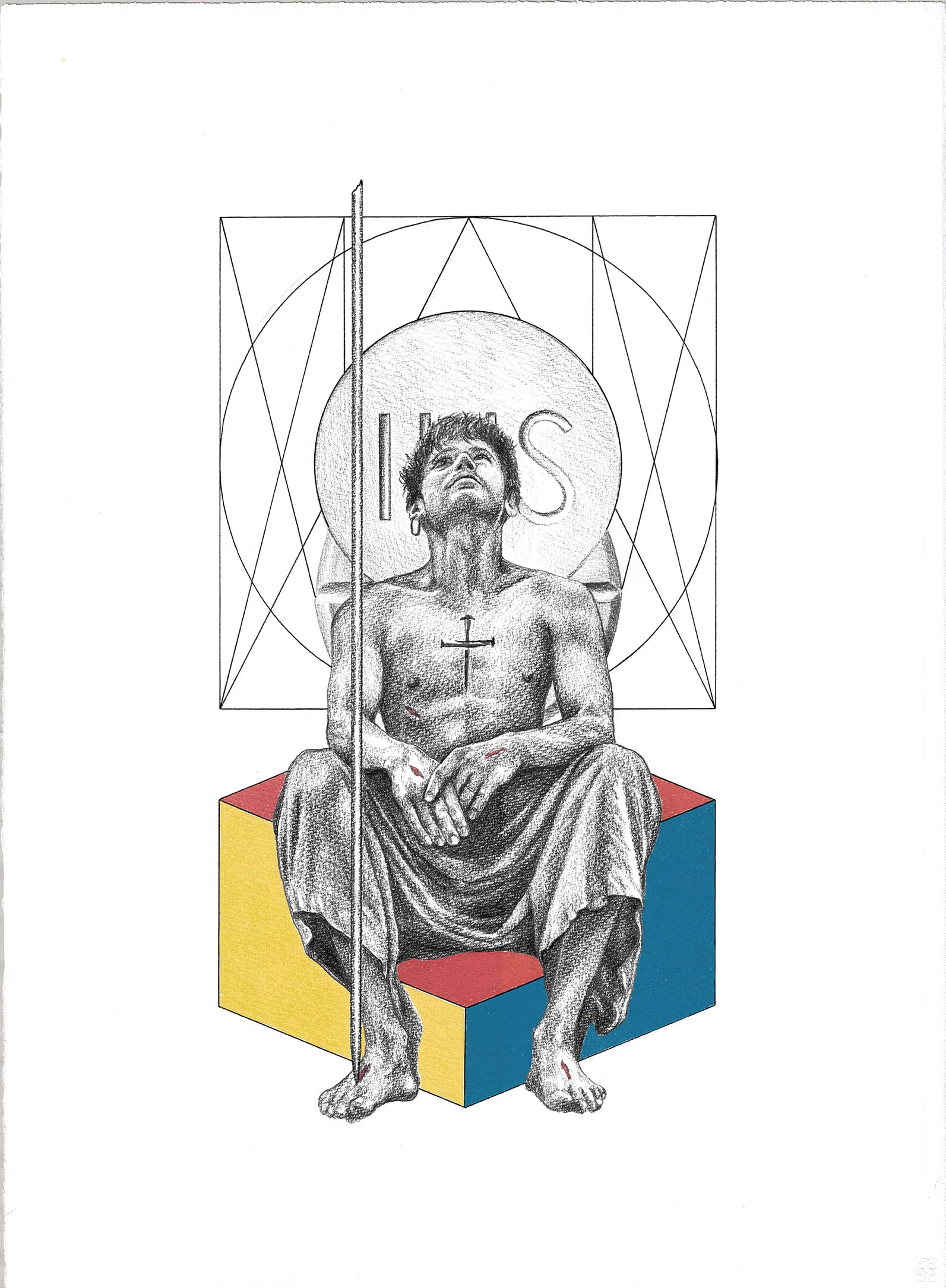
Credits: Giorgio Lupattelli / Scrinium.
Francis is portrayed in the dialogue between body and spirit. The stigmata, the host, the marks of contemporary life and the references to the art of Sol LeWitt intertwine in a composition that invites us to move beyond any opposition between matter and transcendence. The work suggests that the body is not the limit of spiritual experience but the place in which it takes form and becomes visible.
Giorgio Lupattelli
Il corpo come luogo del divino
2026, Mixed media: charcoal, pencil, ink, watercolour on laid paper with untrimmed edges, cm. 50 x 70 (approx.)
- Room
- Sala degli Artisti
- Sequence in the exhibition
- 23 of 28
- Inventory
- OP-007
- Credits
- Giorgio Lupattelli / Scrinium
- Rights
- Rights of use, exhibition and reproduction: Scrinium.
In depth
In this panel the body becomes the centre of the reflection. Francis appears marked by the stigmata, yet alongside this element so deeply bound to Christian tradition there appear tattoos, piercings and other signs belonging to the contemporary imagination.
The artist thus builds a dialogue between different eras, questioning the way in which every age inscribes upon the body its own identity, its own wounds and its own belongings.
Behind Francis appears a large host, which takes on the form of a halo. Behind it a pill can be glimpsed: two apparently distant images that evoke the care of the body and the care of the inner life. The work does not set them in opposition, but places them within one and the same enquiry into fragility and into the human desire for healing.
The entire composition unfolds within a geometric structure inspired by the work of Sol LeWitt, which recalls, in its balance and proportions, Leonardo da Vinci’s Vitruvian Man. The body is not represented as mere biological reality, but as a measure of space, a place of relation between order, harmony and knowledge.
The cube on which Francis is seated also refers to LeWitt’s research, while the rod of Gino De Dominicis’s Calamita Cosmica rests against the figure’s foot, symbolically suggesting a point of contact between the human and the transcendent. It is from this encounter that the artist ideally makes the mark of the stigmata spring forth.
THEOPHANIA does not offer a reflection on the body as object, but as a place of manifestation. The body preserves the memory of the experiences, the sufferings, the transformations and the relationships that run through every person’s life.
Seen in this way, the stigmata too cease to be merely an extraordinary event in Francis’s biography. They become the symbol of an existence in which the relationship with the divine is made visible through the concreteness of a life actually lived.
The work thus invites us to look at the body not as the limit of the spiritual dimension, but as the place in which the person takes form in his or her entirety, uniting matter, consciousness and openness to the transcendent.
OP-019 · Ink on paper · cm 29,7 x 42
The preparatory study
The sheet from which the panel is born: the same composition still in the state of line, with the artist’s handwritten notes naming the symbols before they become image.
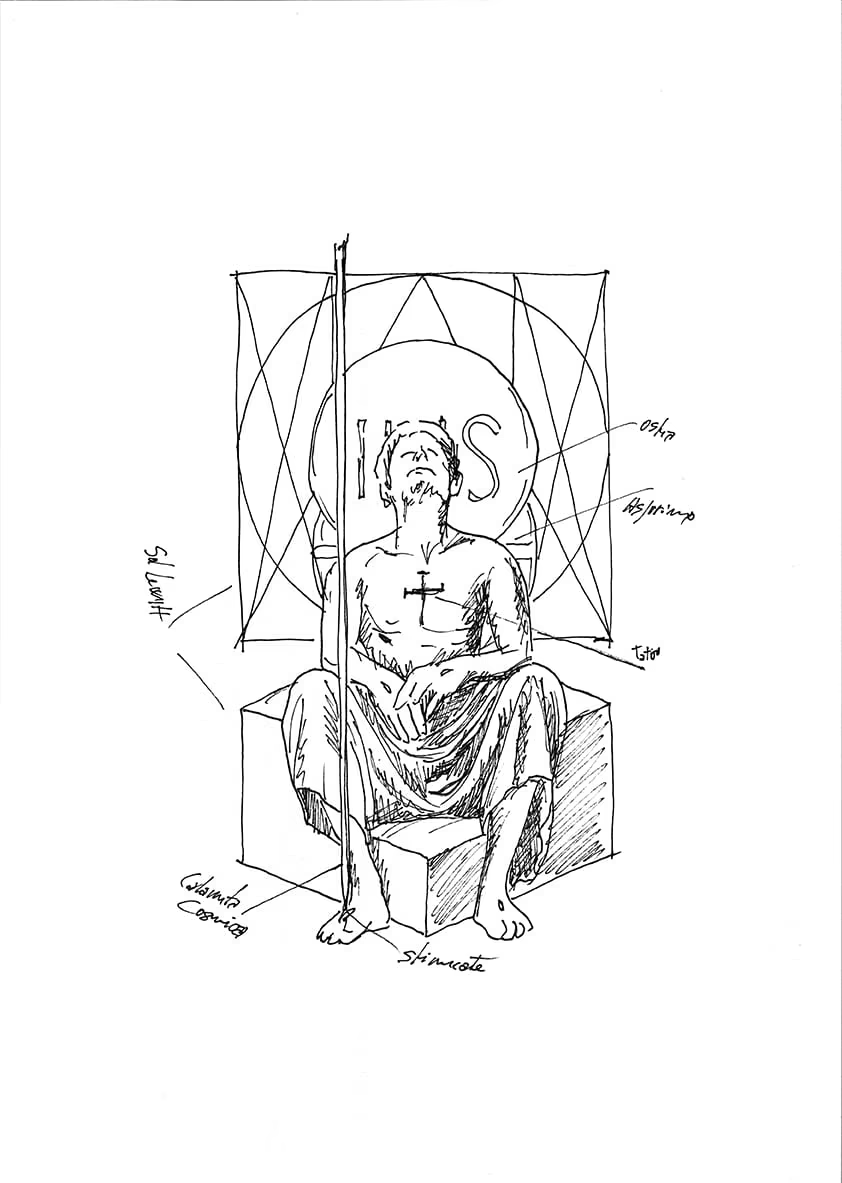
Giorgio Lupattelli
Study for Il corpo come luogo del divino
2026, Ink on paper, cm 29,7 x 42
- Room
- Sale di Messalina, Room 1
- Sequence in the exhibition
- 11 of 28
- Inventory
- OP-019
- Credits
- Giorgio Lupattelli / Scrinium
- Rights
- Rights of use, exhibition and reproduction: Scrinium.