Panel and study · 24 of 28
Le stelle come semi del destino
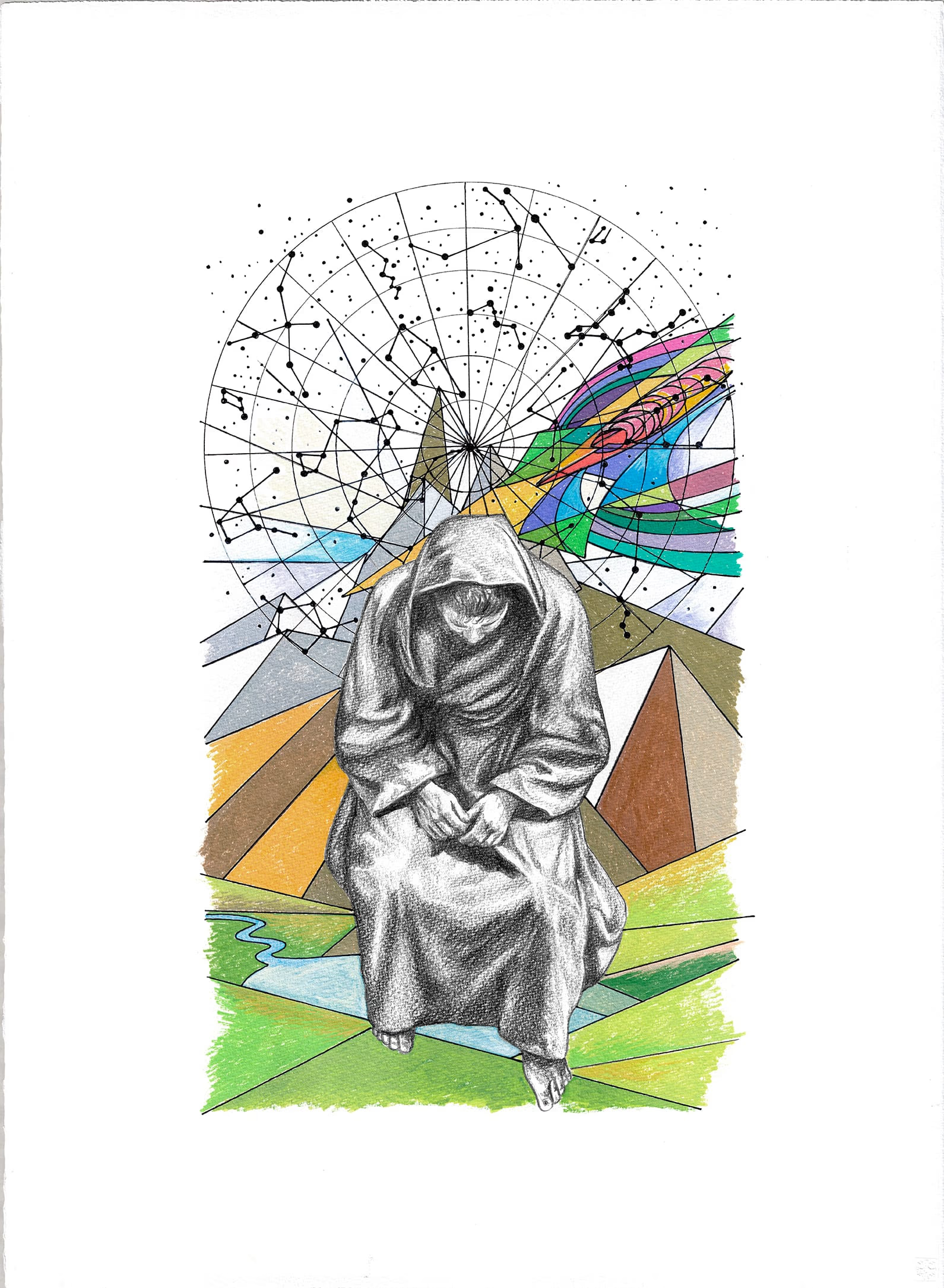
Credits: Giorgio Lupattelli / Scrinium.
Francis is observed from above, immersed between a map of the constellations and a composition inspired by the aeropaintings of Gerardo Dottori. Sky and earth seem to merge into a single vision. The stars do not indicate a destiny already written, but invite reflection on the orientation of life and on the search for an order that runs through the universe and through human experience.
Giorgio Lupattelli
Le stelle come semi del destino
2026, Mixed media: charcoal, pencil, ink, watercolour on laid paper with untrimmed edges, cm. 50 x 70 (approx.)
- Room
- Sala degli Artisti
- Sequence in the exhibition
- 24 of 28
- Inventory
- OP-008
- Credits
- Giorgio Lupattelli / Scrinium
- Rights
- Rights of use, exhibition and reproduction: Scrinium.
In depth
In this panel the point of view changes radically. Francis is portrayed from above, almost as though observed by the gaze of the sky. His figure is placed between a map of the constellations and a composition that recalls the aeropaintings of Gerardo Dottori, one of the leading figures of Italian Futurism.
The aerial perspective dissolves the boundary between terrestrial landscape and celestial space. Human beings no longer occupy the centre of the scene; they take their place within a wider universe in which every element participates in a network of relations.
The constellations are not presented as instruments for predicting the future. They become, rather, images of orientation. Since antiquity the sky has accompanied human journeying, offering points of reference for travel, for navigation and for the understanding of time.
The artist takes up this tradition in order to propose a contemporary reflection: destiny does not appear as a reality already determined, but as a path that takes shape through choices, encounters and relationships.
The reference to Gerardo Dottori widens this perspective. His views from above transform the landscape into a dynamic vision in which earth, light and sky share a single movement. Set within THEOPHANIA, this quotation suggests a continuity between the physical journey and the inner one.
Francis does not look at the stars in search of predetermined answers. He passes through them as one who recognises in creation an invitation to give direction to his own life. Every star thus becomes a seed of possibility, a call to build one’s own path in freedom.
The work invites visitors to question the meaning of orientation. In an age in which human beings have ever more sophisticated instruments for knowing the world, one essential question remains open: which direction should we choose?
THEOPHANIA suggests that true orientation does not arise from control over the future, but from the capacity to recognise the meaning of the relationships that illuminate the path, just as the stars once guided travellers through the night.
OP-020 · Ink on paper · cm 29,7 x 42
The preparatory study
The sheet from which the panel is born: the same composition still in the state of line, with the artist’s handwritten notes naming the symbols before they become image.
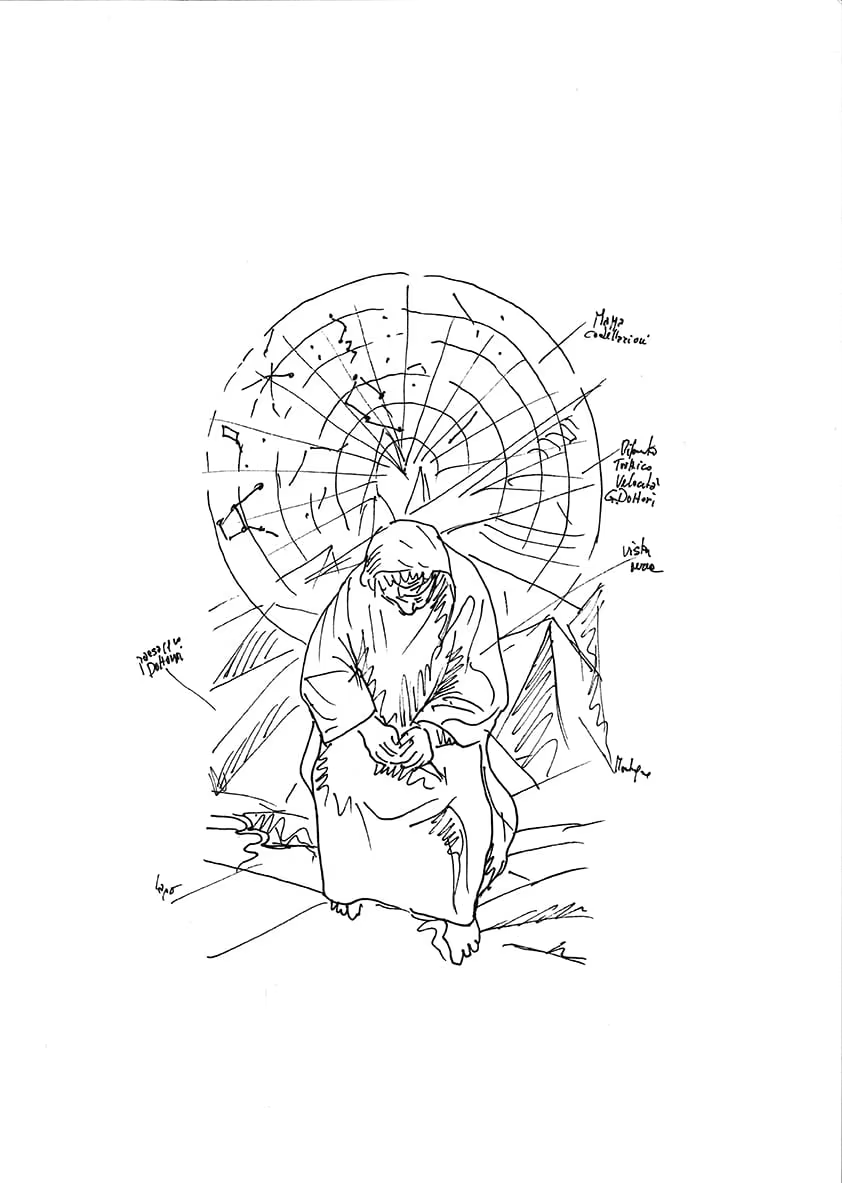
Giorgio Lupattelli
Study for Le stelle come semi del destino
2026, Ink on paper, cm 29,7 x 42
- Room
- Sale di Messalina, Room 1
- Sequence in the exhibition
- 12 of 28
- Inventory
- OP-020
- Credits
- Giorgio Lupattelli / Scrinium
- Rights
- Rights of use, exhibition and reproduction: Scrinium.