Panel and study · 22 of 28
La lode come stato dell’essere
Credits: Giorgio Lupattelli / Scrinium.
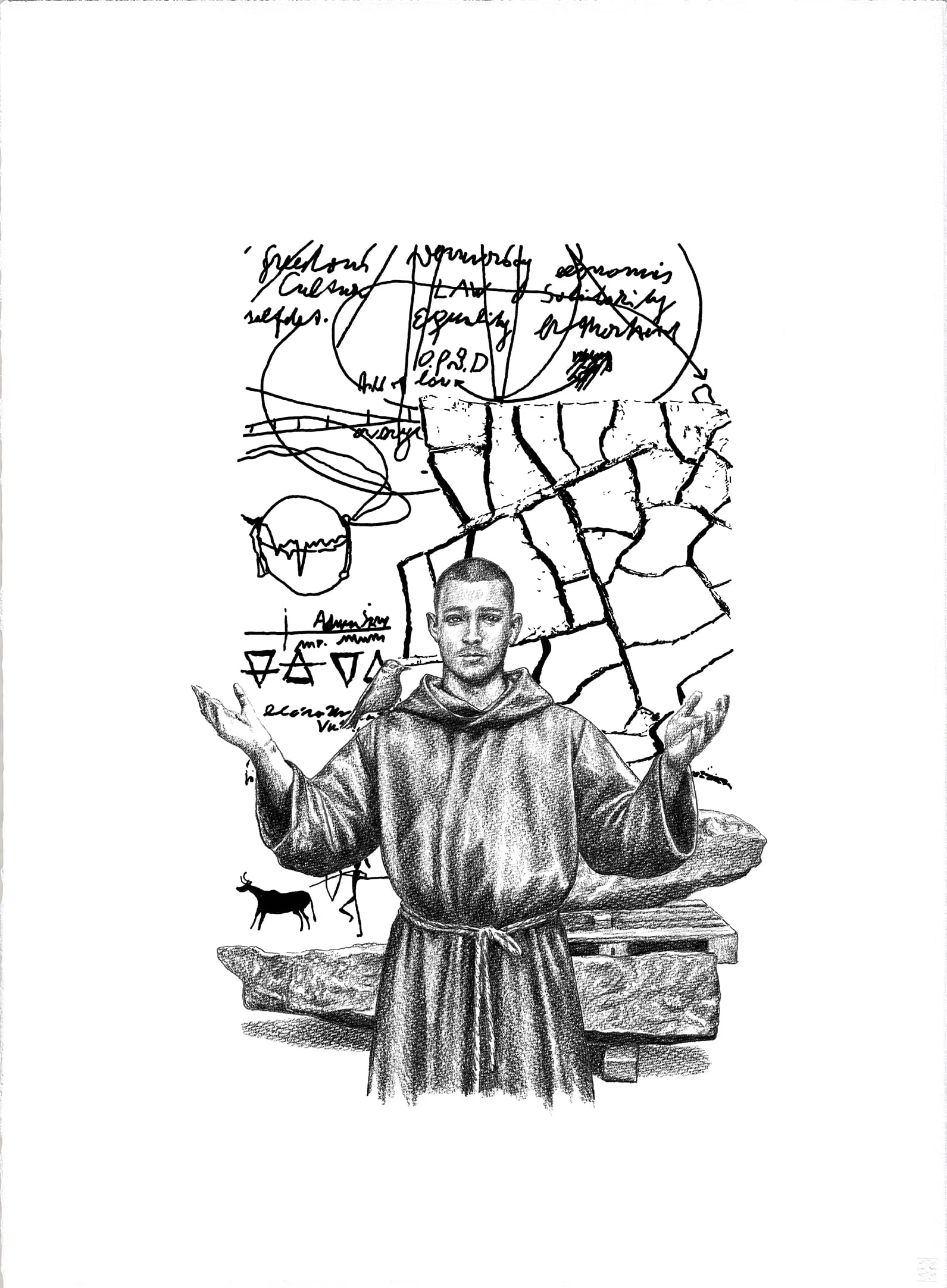
Francis is immersed in nature, surrounded by animals, rocks and landscape. The work suggests that praise is not an occasional gesture but a way of being in the world. The references to Joseph Beuys and Alberto Burri bring contemporary art and Franciscan spirituality into dialogue, offering the image of a creation understood as a living organism in which every element stands in relation to the others.
Giorgio Lupattelli
La lode come stato dell’essere
2026, Mixed media: charcoal, pencil, ink, watercolour on laid paper with untrimmed edges, cm. 50 x 70 (approx.)
- Room
- Sale di Messalina, Room 2
- Sequence in the exhibition
- 22 of 28
- Inventory
- OP-006
- Credits
- Giorgio Lupattelli / Scrinium
- Rights
- Rights of use, exhibition and reproduction: Scrinium.
In depth
In this panel Francis does not observe creation from the outside, nor does he place himself at the centre of the scene. His figure is immersed in nature, taking part in a reality in which earth, rocks, animals and landscape form a single living organism.
The work sets out from one of the deepest intuitions of Franciscan spirituality: praise is born of relationship. It is not simply a word spoken or a ritual gesture, but an attitude through which human beings recognise that they belong to a wider community embracing every form of creation.
The rocks recall the research of Joseph Beuys, an artist who placed the relationship between humanity, nature and transformation at the centre of his work. The marks that run across the background likewise refer to the celebrated Blackboards Beuys produced in the nineteen eighties, the record of a thought in continuous evolution in which art, knowledge and civic responsibility are interwoven.
Among these marks, almost hidden, appear the alchemical symbols of the four elements (earth, air, water and fire) together with echoes of prehistoric languages. The artist thus builds a layering of memories that crosses different cultures and eras, suggesting that humanity’s enquiry into its relationship with nature accompanies the whole history of humankind.
The composition is completed by a reference to Alberto Burri’s Grande Cretto in Gibellina. That work, born on the ruins of the town destroyed by the Belice earthquake, introduces the theme of memory and of art’s capacity to safeguard wounds by turning them into a place of contemplation and rebirth.
THEOPHANIA brings these experiences into relation without seeking equivalences. Francis, Beuys and Burri belong to different times and different languages, yet they share the same attention to matter, to landscape and to human responsibility towards the world we inhabit.
Praise thus becomes a state of being. It does not coincide with the exaltation of nature, but with the capacity to recognise the value of the relationships that make life possible. Every element of creation acquires meaning because it is part of a greater whole, in which human beings are called not to dominate but to safeguard.
OP-018 · Ink on paper · cm 29,7 x 42
The preparatory study
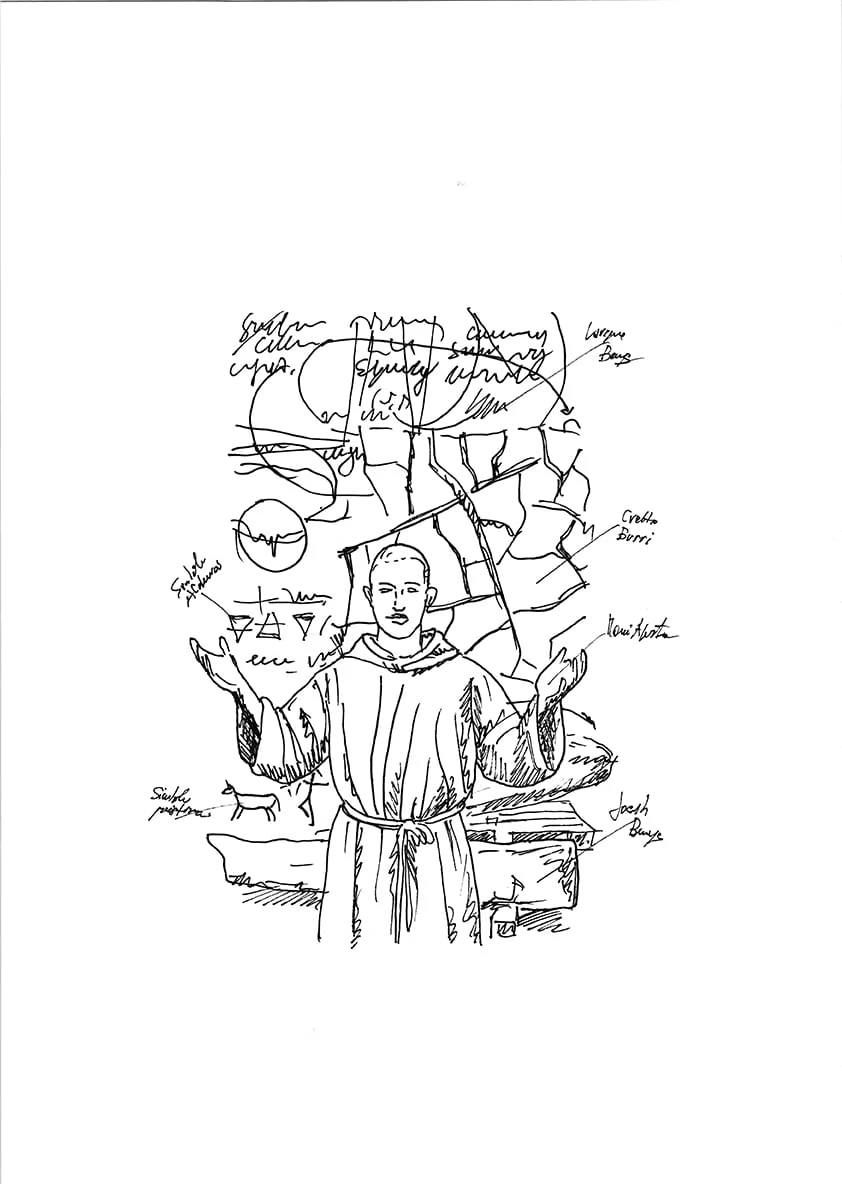
The sheet from which the panel is born: the same composition still in the state of line, with the artist’s handwritten notes naming the symbols before they become image.
Giorgio Lupattelli
Study for La lode come stato dell’essere
2026, Ink on paper, cm 29,7 x 42
- Room
- Sale di Messalina, Room 1
- Sequence in the exhibition
- 10 of 28
- Inventory
- OP-018
- Credits
- Giorgio Lupattelli / Scrinium
- Rights
- Rights of use, exhibition and reproduction: Scrinium.