Panel and study · 26 of 28
Il Tau come sigillo
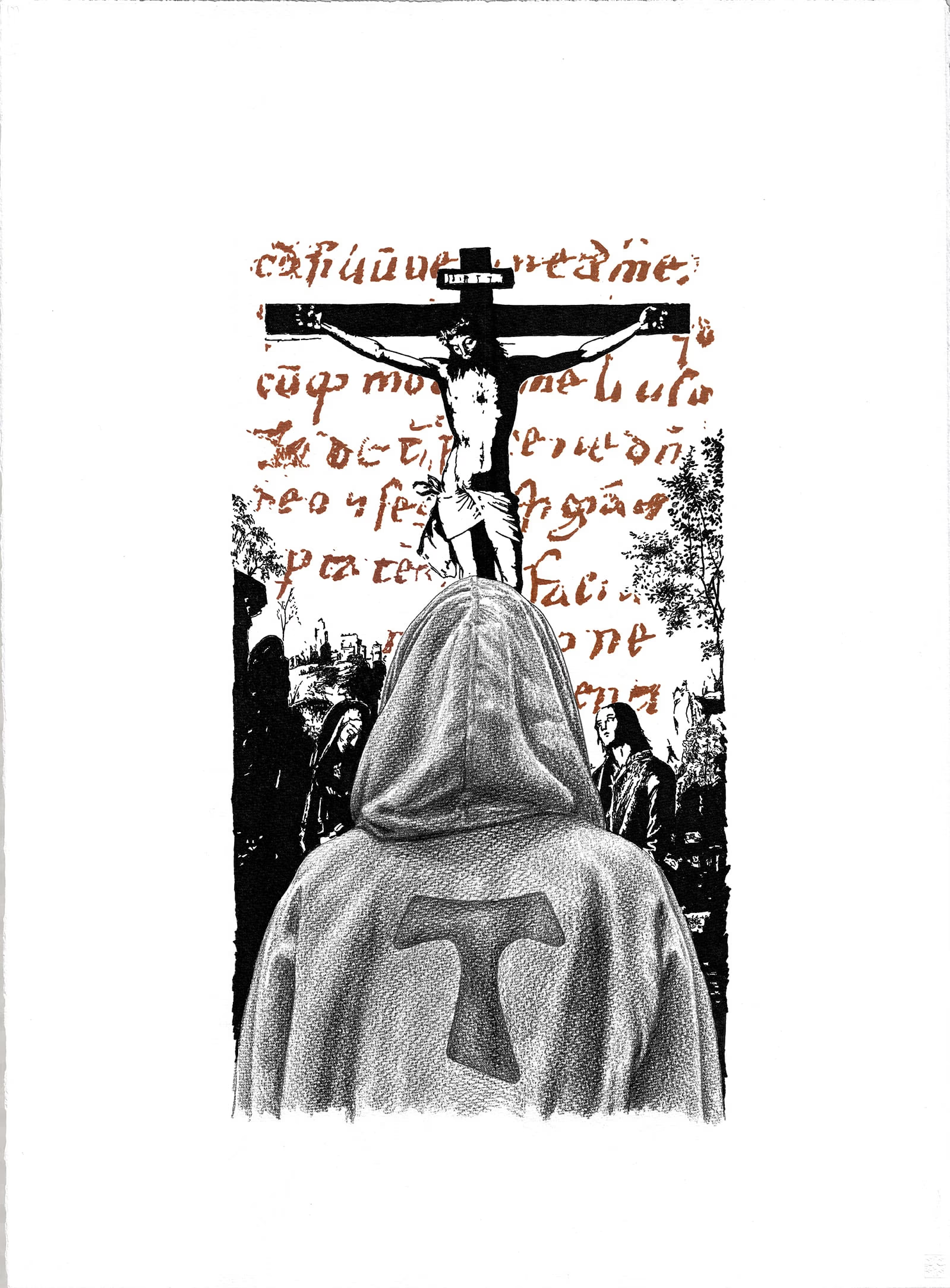
Credits: Giorgio Lupattelli / Scrinium.
The Tau, the Franciscan symbol par excellence, travels through history to the present, where it appears as jewellery, tattoo or badge of belonging. Francis restores it to its original meaning: a sign of humility, salvation and responsibility. The reference to Perugino’s Crucifixion places this reflection within the dialogue between tradition and the language of contemporary art
Giorgio Lupattelli
Il Tau come sigillo
2026, Mixed media: charcoal, pencil, ink, watercolour on laid paper with untrimmed edges, cm. 50 x 70 (approx.)
- Room
- Sala degli Artisti
- Sequence in the exhibition
- 26 of 28
- Inventory
- OP-010
- Credits
- Giorgio Lupattelli / Scrinium
- Rights
- Rights of use, exhibition and reproduction: Scrinium.
In depth
Among all the symbols linked to the figure of Francis of Assisi, the Tau is probably the most recognisable. The last letter of the Hebrew and Greek alphabets, and present in the Latin tradition as well, this ancient sign was adopted by Francis as a synthesis of his own spiritual experience.
For him the Tau did not simply represent a cross or a religious emblem. It was the sign of a transformed life, of humility, of salvation and of the commitment to build the good through the concreteness of existence.
The work invites reflection on the fate of symbols in the contemporary world. Today the Tau appears frequently as a pendant, a tattoo or a decorative element. While it retains a strong evocative power, it sometimes risks losing its bond with the meaning that originally motivated its adoption.
Giorgio Lupattelli returns the symbol to its essential dimension, placing it within a wider reflection on identity and memory.
The composition converses with the Crucifixion by Perugino, one of the great interpreters of the Italian Renaissance. The reference is not illustrative; it sets in relation two different ways of representing the same symbolic core: on one side the tradition of painting, on the other the language of contemporary art.
Seen in this way, the Tau becomes a seal. Not an outward mark, but a sign that calls to an inner responsibility. Every symbol, in fact, retains its value only so long as it continues to generate meaning in the life of those who receive it.
THEOPHANIA thus proposes a reflection on the relationship between memory and the present. Symbols do not belong to the past, because they continue to question the present. The Tau crosses the centuries with its force intact, on condition that it is not reduced to a mere image but recognised as an invitation to a path of transformation.
Francis reminds us that the true seal is not the one engraved on objects, but the one that leaves its trace in conscience and in the relationships each of us builds.
OP-022 · Ink on paper · cm 29,7 x 42
The preparatory study
The sheet from which the panel is born: the same composition still in the state of line, with the artist’s handwritten notes naming the symbols before they become image.
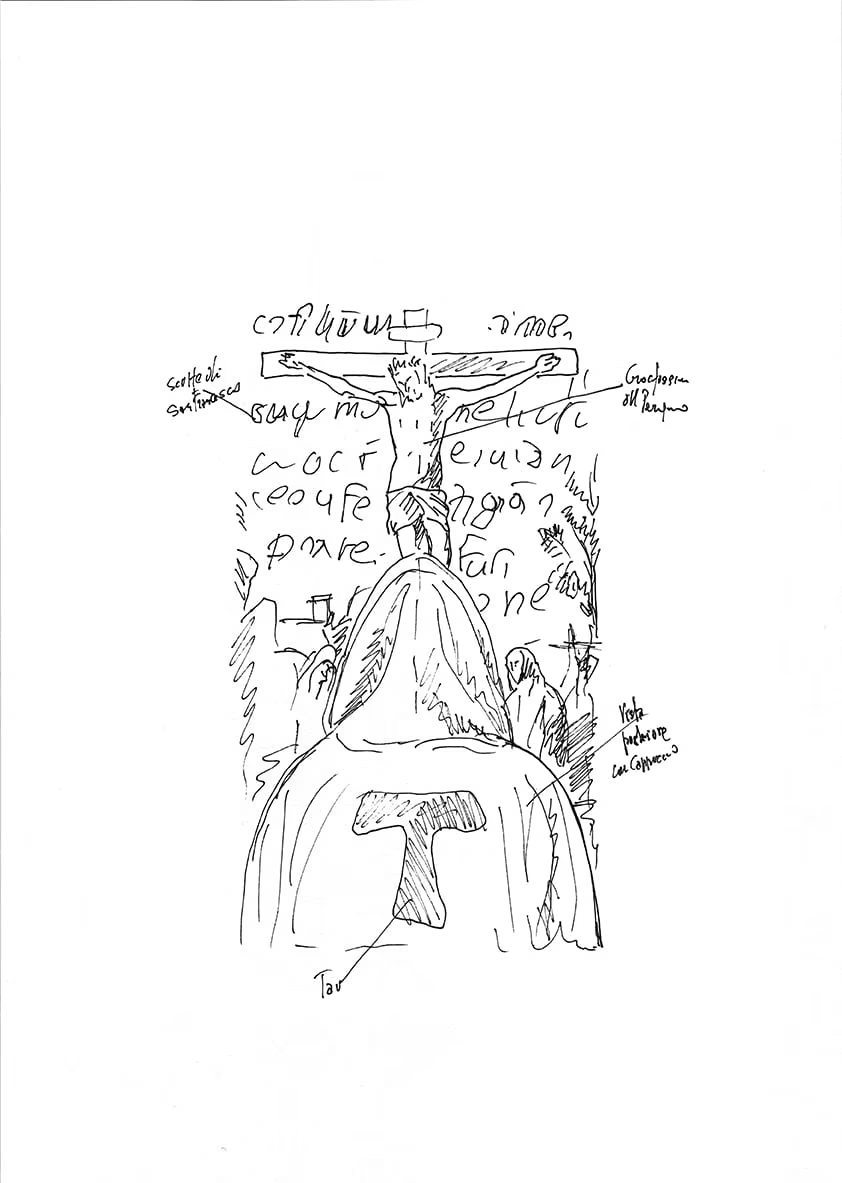
Giorgio Lupattelli
Study for Il Tau come sigillo
2026, Ink on paper, cm 29,7 x 42
- Room
- Sale di Messalina, Room 1
- Sequence in the exhibition
- 14 of 28
- Inventory
- OP-022
- Credits
- Giorgio Lupattelli / Scrinium
- Rights
- Rights of use, exhibition and reproduction: Scrinium.