Panel and study · 27 of 28
Opera Maior come corpo composto
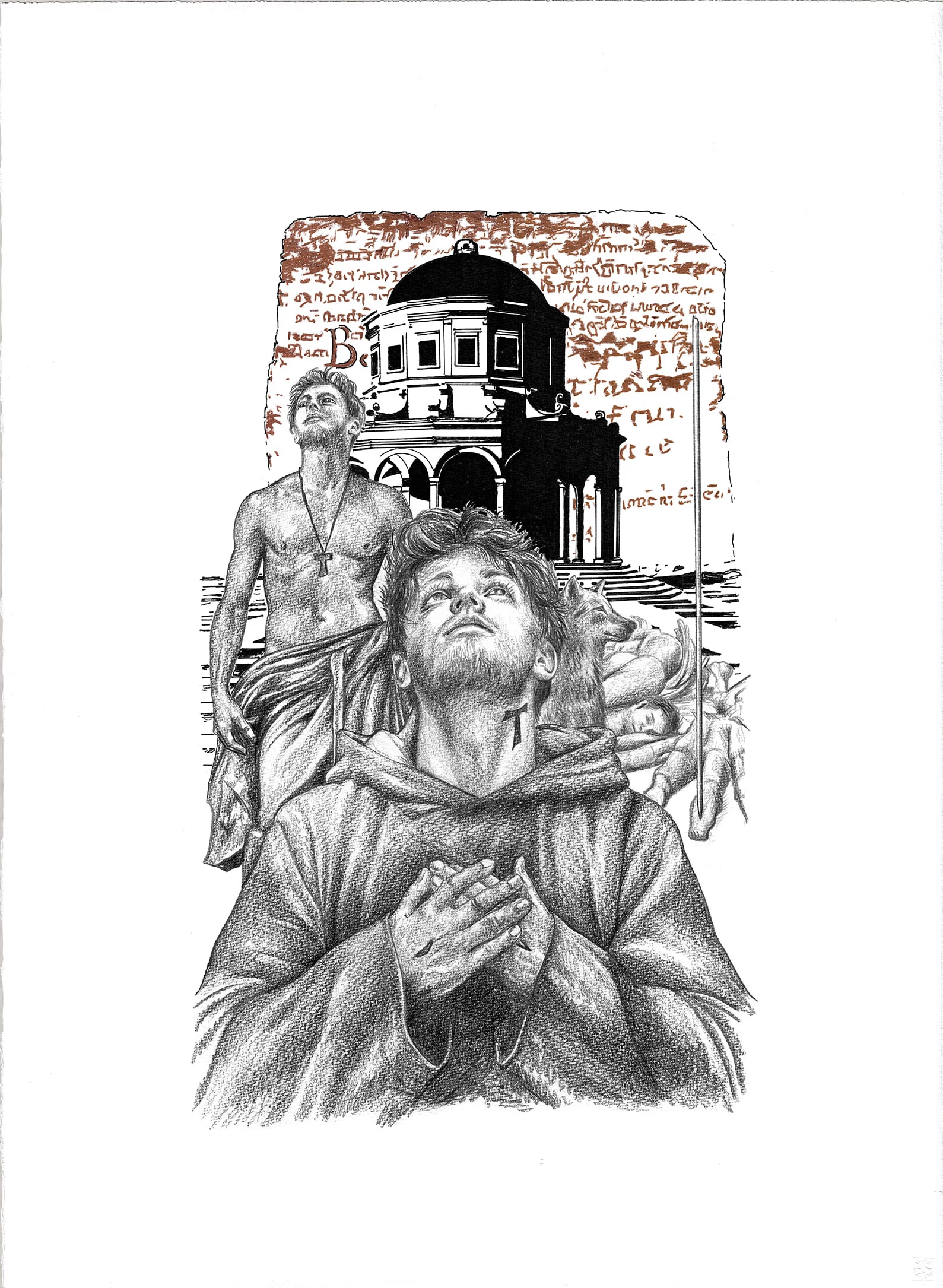
Credits: Giorgio Lupattelli / Scrinium.
Fragments of images, memory and writing converge in a single composition. In the background appears a detail of the Chartula of Assisi, while the figure of Francis gathers and recomposes themes present in the previous works. The work recalls the medieval idea of Opera Maior: an organic whole in which every part finds its meaning in its relation to the whole.
Giorgio Lupattelli
Opera Maior come corpo composto
2026, Mixed media: charcoal, pencil, ink, watercolour on laid paper with untrimmed edges, cm. 50 x 70 (approx.)
- Room
- Sala degli Artisti
- Sequence in the exhibition
- 27 of 28
- Inventory
- OP-011
- Credits
- Giorgio Lupattelli / Scrinium
- Rights
- Rights of use, exhibition and reproduction: Scrinium.
In depth
This panel occupies a particular position within THEOPHANIA. It does not introduce a new theme; it gathers and recomposes the principal motifs that run through the entire cycle.
The artist draws inspiration from the idea of Giotto’s Opera Maior, the great narrative in images in which the fundamental episodes of the life of Francis find their unity in a single narrative organism. Here too the images are not merely juxtaposed: they converse with one another, building a synthesis in which every fragment acquires meaning through its relation to the others.
Lupattelli takes up elements drawn from the four large paintings and from the preceding panels, recomposing them into a new vision. The work thus becomes a memory of the journey already made and, at the same time, a key for reading the entire project.
In the background there emerges a detail of the Chartula of Assisi, in which the autograph handwriting of Francis can be recognised. The presence of the source is not a simple documentary reference. It is the foundation on which the whole creative process is built.
THEOPHANIA is in fact born of an encounter with an authentic testimony. The contemporary work neither replaces the source nor illustrates it. It enters into dialogue with it, generating new possibilities of interpretation.
The Chartula therefore performs a silent but decisive function. It is the thread that runs through the entire path, holding together historical research, artistic experience and spiritual reflection.
In this panel Francis becomes the point where all these levels converge. His figure no longer belongs solely to the narrative of his own life; it represents the principle of unity of the entire THEOPHANIA organism.
The work suggests that knowledge is not built by adding together isolated pieces of information. Every fragment finds its meaning when it is brought back to a wider vision, in which memory, art and documentary source share a single enquiry.
For this reason Opera Maior does not simply represent a synthesis of the artistic journey. It becomes the very image of the method through which THEOPHANIA takes shape: gathering, setting in relation and generating a new unity.
OP-023 · Ink on paper · cm 29,7 x 42
The preparatory study
The sheet from which the panel is born: the same composition still in the state of line, with the artist’s handwritten notes naming the symbols before they become image.
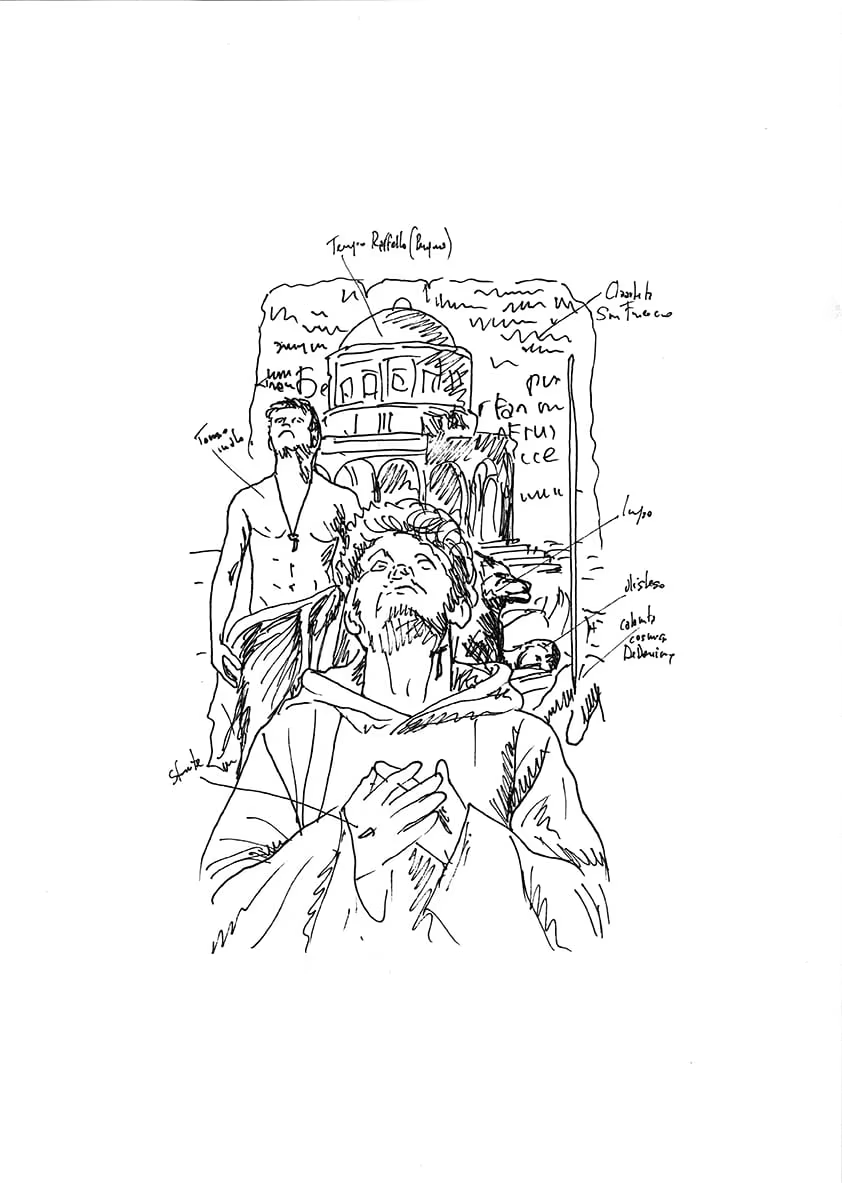
Giorgio Lupattelli
Study for Opera Maior come corpo composto
2026, Ink on paper, cm 29,7 x 42
- Room
- Sale di Messalina, Room 1
- Sequence in the exhibition
- 15 of 28
- Inventory
- OP-023
- Credits
- Giorgio Lupattelli / Scrinium
- Rights
- Rights of use, exhibition and reproduction: Scrinium.