Major work · 4 of 28
THEOPHANIA
Redemption
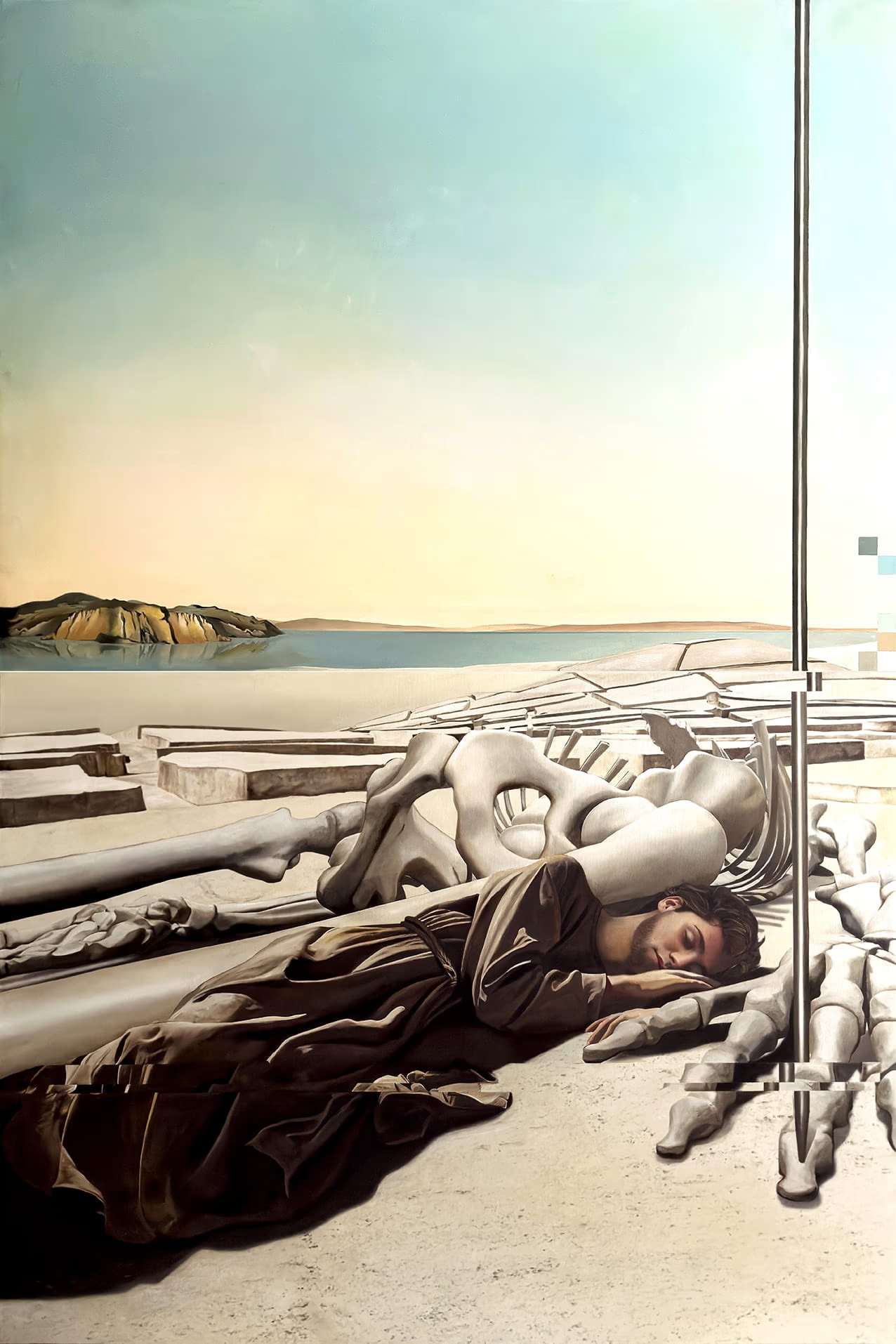
Credits: Giorgio Lupattelli / Scrinium.
Francis lies beside the Calamita Cosmica by Gino De Dominicis, stretched out on the Grande Cretto di Gibellina by Alberto Burri. The scene brings together memory, matter and hope in a landscape crossed by the water of Lago Trasimeno. The work presents redemption as a handing back: what life transforms is not lost, but restored to a deeper meaning.
Giorgio Lupattelli
THEOPHANIA (Redemption)
2026, Oil on canvas, cm. 120 x180
- Room
- Sale di Messalina, Room 1
- Sequence in the exhibition
- 4 of 28
- Inventory
- OP-028
- Credits
- Giorgio Lupattelli / Scrinium
- Rights
- Rights of use, exhibition and reproduction: Scrinium.
In depth
The triptych closes with an image of apparent stillness. Francis lies beside the Calamita Cosmica by Gino De Dominicis, one of the most emblematic works of Italian contemporary art, devoted to the theme of immortality and to the relationship between the body, time and the infinite.
The great vertical rod that crosses the sculpture takes on, within the work, the value of a symbolic axis. It joins earth and sky, the visible dimension and the invisible one, suggesting that every existence remains open to a reality that surpasses it.
Francis appears neither as a defeated man nor as a triumphant figure. His body rests beside the work by De Dominicis in a condition of complete trust. Everything the journey has generated now finds a form of stillness.
The entire scene is set upon the Grande Cretto di Gibellina by Alberto Burri, the immense pour of concrete that holds the rubble of the town destroyed by the Belice earthquake. Burri does not erase the wound: he preserves it, transforming it into memory and landscape.
It is precisely this transformation that enters into dialogue with the title of the work.
Redemption does not consist in eliminating what has been broken, but in restoring to it a possibility of meaning.
For this reason the Cretto does not represent only a tragedy of the past. It becomes the place in which memory is kept without being imprisoned by grief.
In the background appears a stretch of water with an island, an homage to Lago Trasimeno. The water introduces an element of balance and of silence. After the journey, the reconciliation and the transformation, the landscape opens onto a contemplative dimension.
The title RICONSEGNA thus interprets redemption as a movement of restitution.
Francis had begun his own path by emptying himself of what he possessed. Now he hands back what he has become.
He does not simply give back his own life, but everything that life has been able to generate through relationships, choices and love.
THEOPHANIA offers a profoundly human reading of redemption. Every person receives an existence, a time and a history. The fulfilment of the journey does not consist in holding on to them, but in handing them back transformed.
For this reason the triptych ends with an image of peace.
Not because every question has found an answer, but because the search itself has become part of the answer.
The handing back does not close the itinerary.
It entrusts it.